


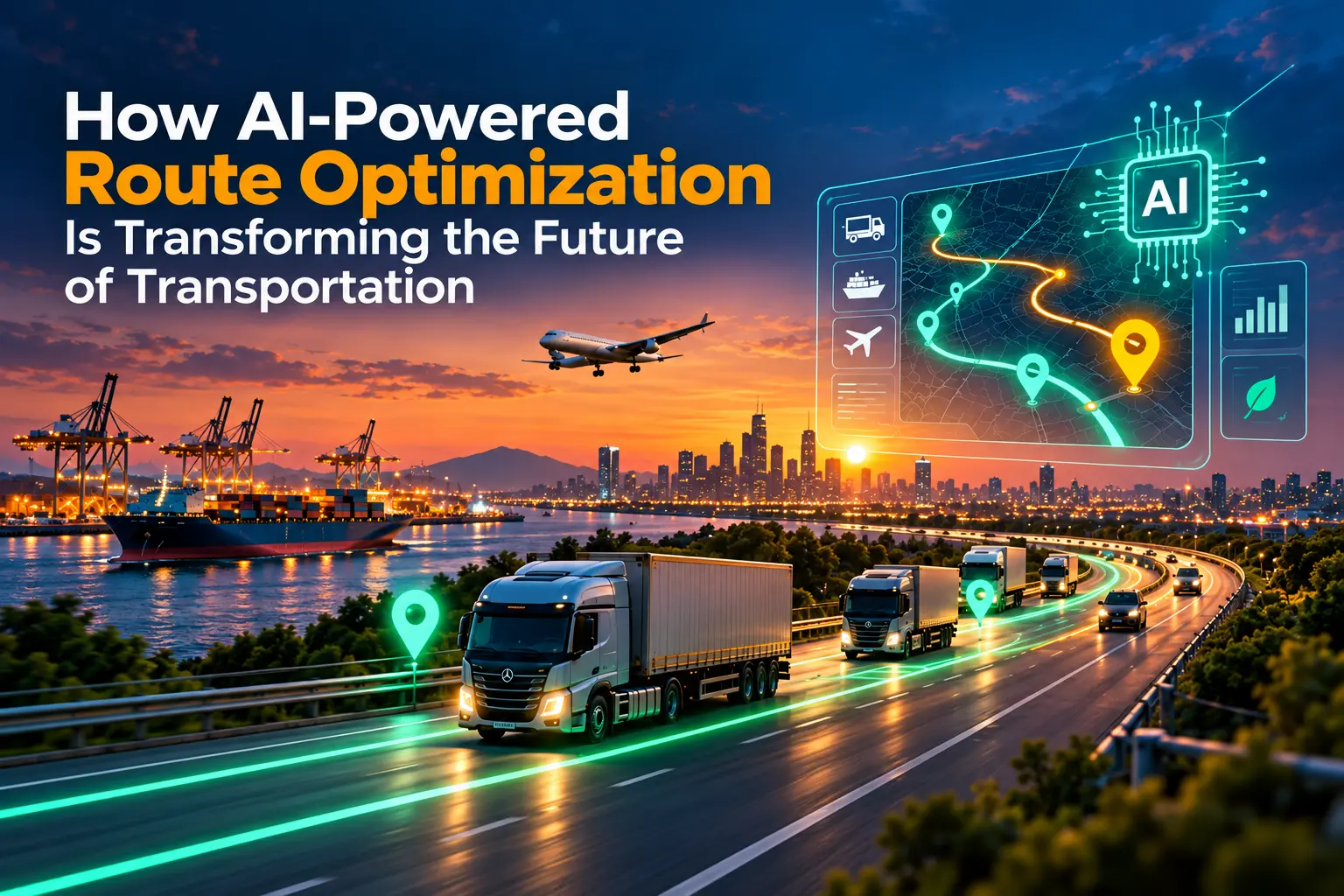
The transportation and logistics industry is undergoing a major transformation as businesses increasingly adopt digital technologies to improve efficiency. Among these innovations, AI-powered route optimization is emerging as an important tool for making transportation smarter, faster and more cost-effective.
Traditionally, route planning depended on fixed routes, driver experience, and manual calculations. However, changing traffic conditions, fuel prices, road restrictions and delivery deadlines can make transportation challenging. Artificial Intelligence (AI) helps address these challenges by analyzing data and identifying more efficient routes based on real-time conditions.
As the logistics industry continues to evolve, AI-powered route optimization is expected to play a significant role in shaping the future of transportation.
What Is AI-Powered Route Optimization?
AI-powered route optimization uses artificial intelligence, machine learning, and data analysis to determine the most efficient routes for transporting goods.
Instead of simply selecting the shortest distance between two locations, AI-powered systems can consider multiple factors, including traffic congestion, road conditions, weather, delivery schedules, vehicle capacity, and fuel consumption.
By analyzing these variables, businesses can make better transportation decisions and respond more effectively to unexpected changes during a journey.
For logistics companies managing multiple vehicles and delivery locations, this technology can help improve route planning and overall operational efficiency.
How AI Is Transforming Transportation
1. Reducing Fuel Consumption and Transportation Costs
Fuel is one of the major operating expenses in road transportation. Unnecessary detours, traffic congestion, and poorly planned routes can increase fuel consumption and transportation costs.
AI-powered route optimization helps identify efficient routes by analyzing distance, traffic patterns, and other relevant factors. This can reduce unnecessary travel and help businesses control fuel expenses.
Over time, better route planning can contribute to improved cost management and more efficient transportation operations.
2. Improving Delivery Speed and Reliability
Timely deliveries are essential for maintaining customer satisfaction and business relationships. However, unexpected traffic, road closures, and changing weather conditions can affect delivery schedules.
AI-powered systems can analyze current traffic information and suggest alternative routes when disruptions occur. This helps logistics teams make informed decisions and potentially minimize delays.
Although AI cannot eliminate every transportation challenge, it can improve the ability to respond to changing road conditions.
3. Enhancing Fleet Management
Managing multiple trucks across different routes requires careful coordination. Businesses need to consider vehicle availability, delivery priorities, driver schedules, and shipment requirements.
AI can support fleet managers by helping assign vehicles to suitable routes, identify inefficient vehicle movements, and improve fleet utilization.
With better planning, logistics companies can make more effective use of available resources while reducing unnecessary operational complexity.
4. Enabling Real-Time Route Adjustments
Traditional route plans may become less effective when conditions change during transportation.
AI-powered systems can use updated information to recommend route adjustments when traffic congestion, road restrictions, or other disruptions occur.
This flexibility allows transportation teams to respond more quickly to unexpected situations and make better-informed decisions throughout the delivery process.
5. Supporting Sustainable Transportation
Sustainability is becoming an important consideration for businesses across industries. Reducing unnecessary vehicle movement can help lower fuel consumption and transportation-related emissions.
AI-powered route optimization can contribute to this goal by identifying more efficient routes and helping reduce avoidable mileage.
When combined with better vehicle maintenance, efficient loading, and effective fleet management, smarter route planning can support more sustainable logistics operations.
The Role of AI in the Future of Logistics
The future of transportation will increasingly depend on data-driven decisions and connected technologies. AI-powered route optimization is expected to work alongside GPS tracking, predictive analytics, transportation management systems, and automated reporting tools.
These technologies can help businesses gain better visibility into their transportation operations, identify potential disruptions, and improve planning accuracy.
For example, predictive analytics may help logistics teams anticipate recurring traffic delays, while integrated fleet systems can provide a clearer picture of vehicle movements and delivery progress.
As these capabilities develop, businesses that adopt suitable digital solutions may be better positioned to manage complex supply chains and changing customer expectations.
However, successful implementation will depend on data quality, technology integration, operational requirements, and the ability of teams to use these tools effectively.
Why AI-Powered Route Optimization Matters for Businesses
For manufacturers, retailers, distributors, and other businesses that depend on freight transportation, efficient route planning can directly influence operating costs and delivery performance.
AI-powered route optimization offers opportunities to:
- Improve transportation planning and scheduling.
- Reduce unnecessary travel and fuel expenses.
- Support more reliable delivery timelines.
- Improve vehicle utilization.
- Respond more effectively to route disruptions.
- Make transportation operations more data-driven.
The results will vary depending on the routes, shipment volumes, traffic conditions, and technology being used. Nevertheless, intelligent route planning can become a valuable part of a modern logistics strategy.
Conclusion
AI-powered route optimization is helping reshape the future of transportation by bringing greater intelligence, flexibility and efficiency to logistics operations. From reducing unnecessary mileage to improving delivery planning, AI offers businesses new ways to manage transportation challenges.
As technology continues to advance, combining intelligent planning with reliable transportation services will become increasingly important for building efficient and responsive supply chains.
At SK Translines, we recognize the importance of efficient transportation planning and evolving logistics practices in meeting modern business requirements. Smarter transportation strategies can help businesses work towards better delivery performance, improved cost control, and long-term supply chain efficiency.