


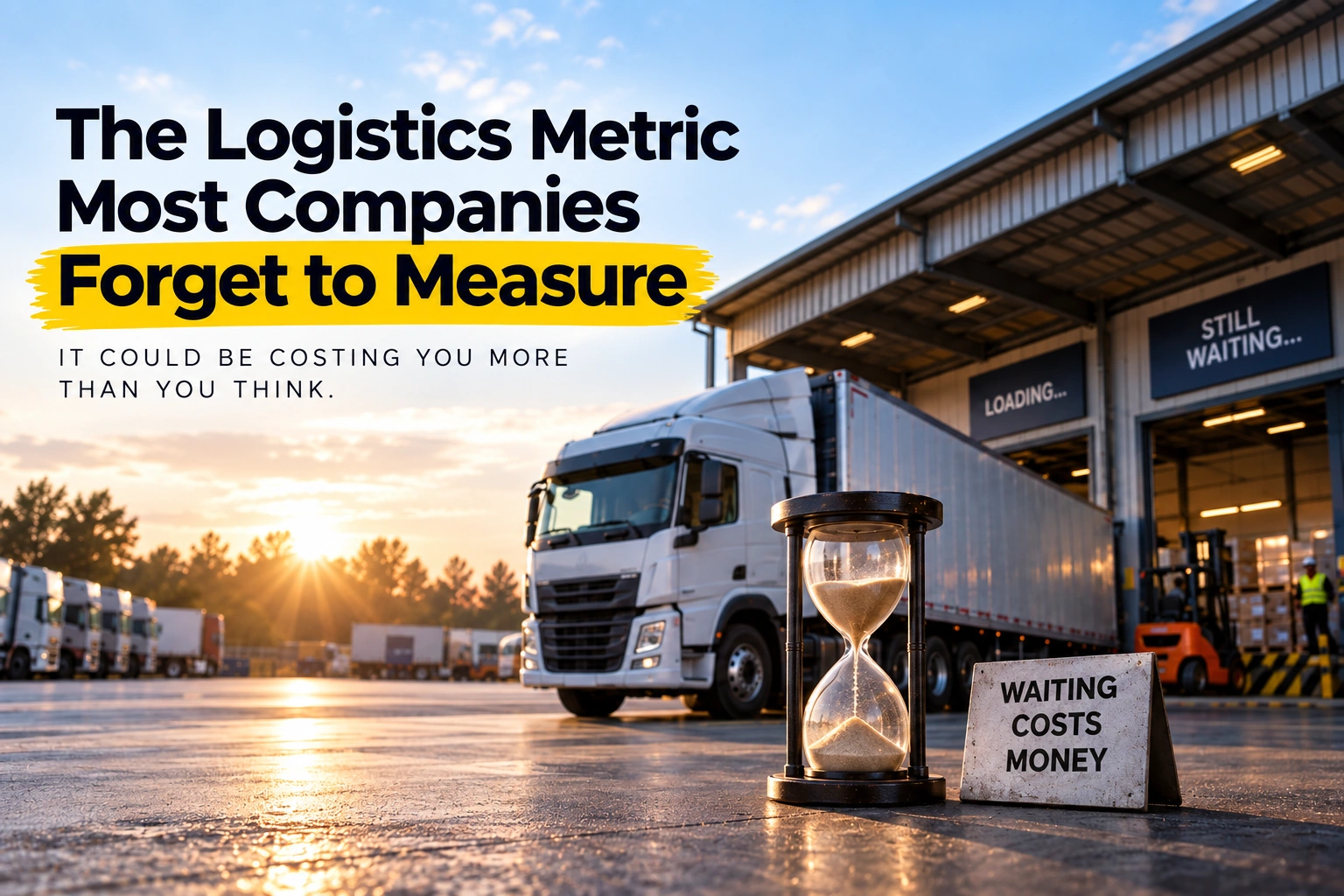
Most logistics companies track the obvious numbers.
Delivery time. Fuel cost. Vehicle utilization. On-time delivery percentage. Driver performance. Maintenance expenses.
All of these matter.
But there is one metric that often gets overlooked:
The Cost of Waiting
Waiting time across logistics operations can quietly reduce productivity, increase costs, and delay deliveries without showing up clearly in standard performance reports.
A truck may not be moving, but the business may still be spending money.
Where Does Waiting Happen?
Waiting time can occur at almost every stage of a logistics journey.
A vehicle may be waiting for loading at a warehouse.
A driver may be waiting for documents.
A truck may reach a customer location but remain idle because unloading is delayed.
A shipment may be ready, but the assigned vehicle may not be available.
Individually, these delays may seem small. But when they happen across dozens or hundreds of trips, the impact becomes significant.
Why Waiting Time Matters
A vehicle generates value when it is moving goods efficiently.
When it remains idle unnecessarily, several costs continue to accumulate.
These may include:
- Driver wages
- Fuel consumption during idling
- Vehicle depreciation
- Delayed vehicle availability
- Missed delivery slots
- Overtime expenses
- Reduced fleet productivity
This is why simply measuring delivery time is not enough.
A shipment may technically be delivered on time while the vehicle spends hours waiting unnecessarily throughout the journey.
Measure the Entire Vehicle Cycle
Instead of looking only at the time between dispatch and delivery, logistics companies should track the complete vehicle cycle.
This can include:
Vehicle arrival time
When the truck reaches the loading location.
Loading start time
When loading actually begins.
Loading completion time
When the vehicle is ready to leave.
Transit time
The actual travel duration.
Unloading wait time
How long the vehicle waits before unloading begins.
Unloading duration
How long the unloading process takes.
Vehicle release time
When the truck becomes available for its next assignment.
Tracking these stages helps businesses understand exactly where time is being lost.
A Small Delay Can Become a Big Cost
Consider a fleet where each vehicle loses just one hour per day waiting at loading or unloading points.
For a fleet of 50 vehicles, that becomes 50 hours of lost operational capacity every day.
Over a month, those hours can represent hundreds of potential trips, deliveries, or productive kilometres.
The problem is that these costs are often spread across operations, making them difficult to notice.
That is why waiting time should be treated as a measurable logistics KPI, not just an unavoidable part of transportation.
Turn Waiting Time into Actionable Data
Once waiting time is measured consistently, logistics teams can begin identifying patterns.
For example:
- Which customers regularly have long unloading delays?
- Which warehouses take the longest to load vehicles?
- Which routes experience the most operational stoppages?
- Which drivers or vehicles experience repeated idle periods?
- At what times do delays occur most frequently?
This data helps businesses improve scheduling, customer coordination, route planning, dispatching, and fleet allocation.
Instead of reacting to delays after they happen, teams can work on reducing them systematically.
The Goal Is Not Just Faster Delivery
Logistics optimization is often associated with getting shipments from point A to point B faster.
But true efficiency means making better use of every hour, every vehicle, and every resource.
A logistics operation can have good delivery times and still lose significant productivity through hidden waiting periods.
The companies that measure these invisible delays gain a clearer understanding of their actual operating efficiency.
From Idle Time to Productive Time
Every unnecessary hour a truck spends waiting is an hour that cannot be used for the next delivery.
By monitoring waiting time alongside traditional logistics KPIs, businesses can identify hidden inefficiencies and improve the overall performance of their supply chain.
At S K Translines, efficient logistics goes beyond moving goods from one location to another.
It is about improving visibility, reducing avoidable delays, and making every movement count.
Because in logistics, sometimes the biggest cost is not how far the vehicle travels.
It is how long it stays still.