


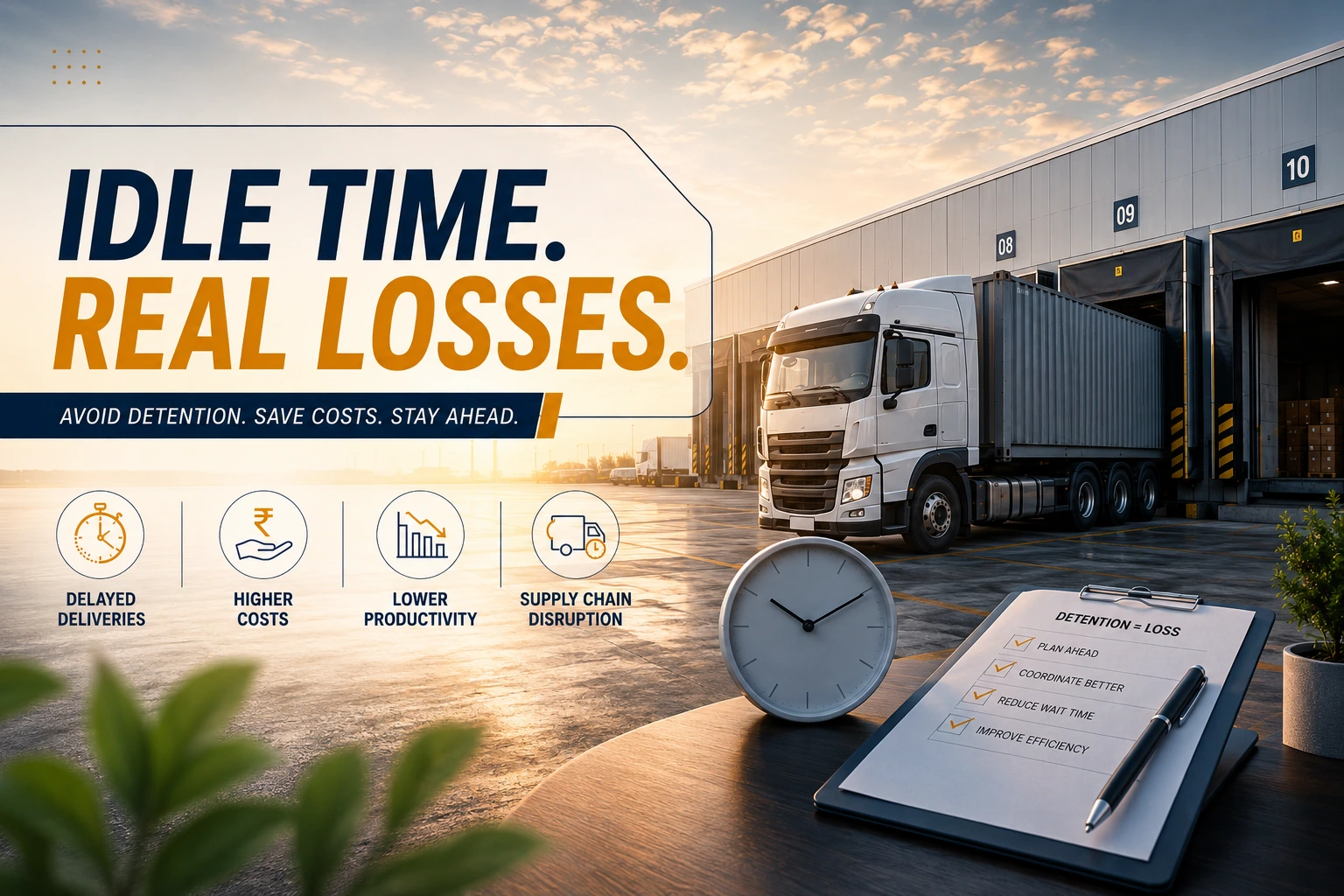
In logistics, a vehicle earns value when it is moving. However, trucks often spend hours waiting at factories, warehouses, loading points or delivery locations.
This waiting period is known as vehicle detention.
Although detention may seem like a routine operational delay, it can increase transportation costs, reduce vehicle availability and affect delivery schedules across the supply chain.
For manufacturers, distributors and logistics providers, reducing vehicle detention is essential for improving efficiency and controlling costs.
What Is Vehicle Detention in Logistics?
Vehicle detention occurs when a truck remains at a pickup or delivery location longer than the agreed or expected loading and unloading time.
For example, a vehicle may arrive at a factory at the scheduled time but wait several hours because the cargo is not ready. Similarly, a truck may reach a warehouse but remain outside due to congestion, unavailable labour or incomplete documentation.
During this time, the vehicle, driver and transport resources remain occupied without making progress.
Common Causes of Vehicle Detention
Detention is rarely caused by a single issue. It often results from poor coordination between transporters, factory teams, warehouse staff and customers.
1. Cargo Is Not Ready
One of the most common causes is placing a vehicle before the shipment is packed, inspected or approved for dispatch.
The truck arrives on time, but loading cannot begin.
2. Loading-Area Congestion
Factories and warehouses may schedule multiple vehicles during the same time slot.
When dock capacity is limited, trucks form queues and loading gets delayed.
3. Labour Shortages
Loading and unloading depend on the availability of trained workers, forklift operators and supervisors.
If labour is unavailable, the vehicle remains idle.
4. Incomplete Documentation
Missing invoices, e-way bills, lorry receipts, gate passes or delivery challans can prevent the vehicle from entering or leaving the premises.
Even a small documentation error can create a long delay.
5. Incorrect Shipment Information
A vehicle may be assigned based on inaccurate cargo weight, quantity or dimensions.
If the selected vehicle is unsuitable, loading may stop until another arrangement is made.
6. Poor Communication
Delays often occur when the transporter, driver, consignor and consignee do not receive the same information.
Changes in pickup time, gate number, cargo quantity or contact person may not be communicated properly.
7. Unloading Delays at the Destination
Detention does not happen only at pickup points.
Vehicles may wait at the delivery location because storage space is unavailable, the receiving team is busy or the customer has not approved unloading.
The Business Cost of Vehicle Detention
Vehicle detention affects much more than the waiting truck.
Higher Transportation Costs
The transporter continues to bear driver, fuel and vehicle operating costs during the waiting period.
These additional expenses may result in detention charges for the customer.
Lower Vehicle Utilisation
A truck delayed at one location may miss its next scheduled trip.
This reduces the number of trips completed and affects fleet productivity.
Delivery Delays
Late loading can delay the entire shipment.
In multimodal transportation, it may also cause the cargo to miss a rail schedule, warehouse slot or onward connection.
Increased Fuel Consumption
Vehicles often keep their engines running during loading-area waits, especially when movement within the facility is expected.
This increases fuel consumption and emissions.
Driver Fatigue
Long waiting times can extend the driver’s working hours.
This may reduce rest time, increase fatigue and affect road safety.
Supply-Chain Disruption
A delayed shipment can affect production, inventory availability and customer deliveries.
For time-sensitive goods, even a few hours of detention may create significant operational problems.
How to Prevent Vehicle Detention
Vehicle detention can be reduced through better planning, communication and visibility.
Confirm Cargo Readiness
A vehicle should be placed only after confirming that the goods are packed, inspected and ready for dispatch.
Introduce Loading Slots
Factories and warehouses can assign fixed reporting and loading times.
This prevents too many vehicles from arriving at the same time.
Prepare Documents in Advance
Invoices, e-way bills, permits and shipment details should be verified before the vehicle arrives.
A standard dispatch checklist can reduce errors.
Share Accurate Shipment Details
Transporters should receive correct information about cargo weight, quantity, dimensions and handling requirements.
This helps them assign the right vehicle.
Improve Communication
Drivers, transport coordinators, factory teams and customers should receive real-time updates about delays or changes.
A clear contact person should be available at every location.
Use GPS and Digital Tracking
GPS tracking helps logistics teams monitor vehicle arrival, waiting time, loading progress and departure.
It also makes recurring detention points easier to identify.
Monitor Detention Performance
Businesses should track:
- Average loading time
- Average unloading time
- Vehicle waiting time
- On-time dispatch rate
- Detention cost per shipment
- Location-wise delay frequency
These metrics help identify bottlenecks and improve future planning.
The Role of a Reliable Logistics Partner
An experienced logistics provider can help businesses reduce detention by coordinating vehicle placement, verifying pickup requirements and monitoring shipment progress.
A dependable partner can also:
- Plan vehicle reporting times
- Communicate with loading teams
- Select suitable vehicles
- Track detention at each location
- Support documentation
- Manage road and rail coordination
- Escalate delays quickly
This improves vehicle utilisation and helps shipments move more reliably.
Conclusion
Vehicle detention is often treated as a normal part of transportation, but repeated waiting can significantly increase logistics costs and disrupt delivery schedules.
By confirming cargo readiness, scheduling loading slots, preparing documents in advance and using real-time tracking, businesses can reduce idle time and improve supply-chain performance.
SK Translines supports businesses with road transportation, rail logistics, warehousing and integrated logistics solutions, helping reduce operational delays and improve shipment reliability.