


Introduction
The logistics industry is evolving rapidly, and traditional freight planning methods are no longer enough to meet modern business demands. Delays, rising fuel costs, traffic congestion, and unpredictable delivery schedules can affect supply chains and customer satisfaction.
Predictive analytics is helping businesses move from reactive decision-making to proactive planning. By analysing historical data, real-time information, and emerging trends, logistics companies can anticipate potential challenges and make smarter freight management decisions.
What Is Predictive Analytics in Freight Planning?
Predictive analytics uses data, statistical models, and artificial intelligence (AI) to forecast future outcomes. In freight planning, it helps businesses estimate delivery times, identify potential disruptions, optimise routes, and manage transportation resources more efficiently.
Instead of waiting for a shipment delay to occur, businesses can identify possible risks in advance and take preventive action.
How Predictive Analytics Is Transforming Freight Planning
1. Predicting Delivery Delays Before They Happen
Unexpected traffic, weather conditions, and operational issues can disrupt delivery schedules. Predictive analytics evaluates historical shipment data and current conditions to identify possible delays.
This allows logistics teams to adjust delivery schedules, inform customers in advance, and explore alternative routes before problems become serious.
2. Smarter Route Planning and Optimisation
Choosing the right route involves more than finding the shortest distance. Traffic patterns, road conditions, fuel consumption, and delivery deadlines all influence transportation efficiency.
Predictive analytics helps identify routes that are more likely to provide timely and cost-effective deliveries. This can reduce unnecessary travel, improve vehicle utilisation, and support better fuel management.
3. Better Freight Demand Forecasting
Freight demand can change because of seasonal trends, festivals, market fluctuations, and changing customer requirements.
By analysing previous shipment patterns and market data, businesses can forecast transportation demand more accurately. This helps them plan vehicle availability, allocate resources, and manage capacity during peak periods.
4. Proactive Risk Management
Supply chain disruptions can occur due to severe weather, road closures, equipment failures, or unexpected operational challenges.
Predictive systems can highlight potential risks and help logistics managers prepare alternative plans. Early warnings allow businesses to respond faster, minimise disruptions, and maintain more reliable transportation operations.
5. Improved Cost and Resource Management
Unplanned trips, underutilised vehicles, and delayed shipments can increase freight costs. Predictive analytics helps businesses identify inefficiencies and make better decisions about vehicle allocation, shipment consolidation, and resource utilisation.
With improved planning, logistics companies can control avoidable expenses while maintaining service quality.
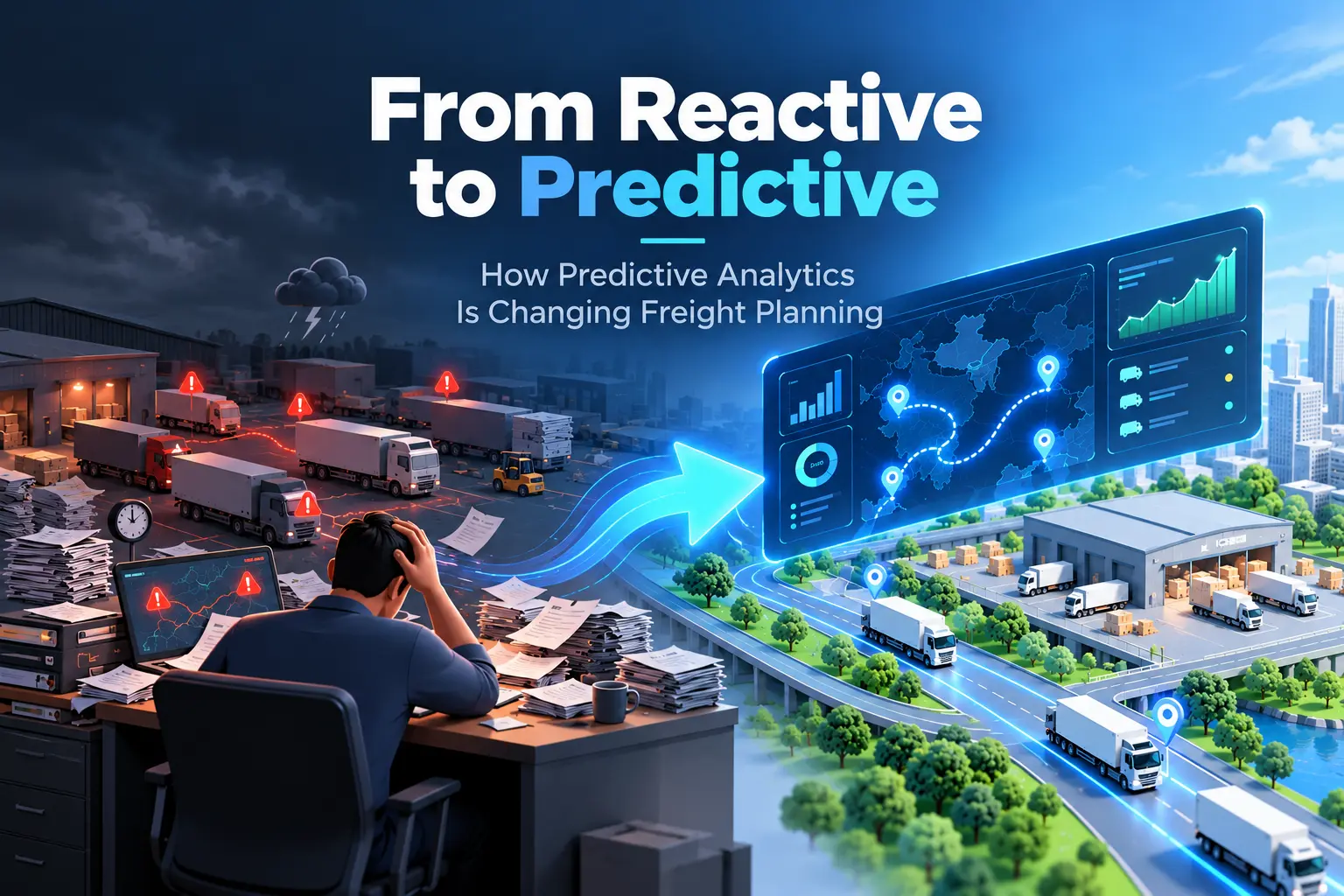
Reactive vs. Predictive Freight Planning
Traditional freight planning often focuses on resolving problems after they occur. Predictive freight planning focuses on identifying potential problems before they affect operations.
For example, a reactive logistics team may respond to a delivery delay after a truck gets stuck in traffic. A predictive approach may identify the risk earlier and recommend an alternative route.
This shift enables faster decisions, better coordination, and more dependable deliveries.
The Role of AI and Real-Time Data
Artificial intelligence is making predictive analytics more useful by processing large volumes of transportation data quickly. When combined with GPS tracking, traffic information, weather updates, and shipment records, AI-powered systems can provide timely insights for freight planning.
As these technologies advance, logistics businesses can improve delivery forecasting, respond to changing conditions, and make more informed operational decisions.
However, predictive analytics works best when businesses have reliable data, suitable technology, and teams that can act on the insights generated.
Conclusion
Predictive analytics is changing freight planning from a process of reacting to disruptions into one of anticipating and preventing them. By improving delivery forecasting, route optimisation, demand planning, and risk management, it helps logistics businesses operate more efficiently in an increasingly complex supply chain environment.
For businesses looking to build more resilient transportation operations, adopting data-driven freight planning can be an important step towards smarter logistics and better customer experiences.
Looking for reliable logistics and transportation solutions? Visit SK Translines to explore transportation services designed to support your business logistics requirements.