


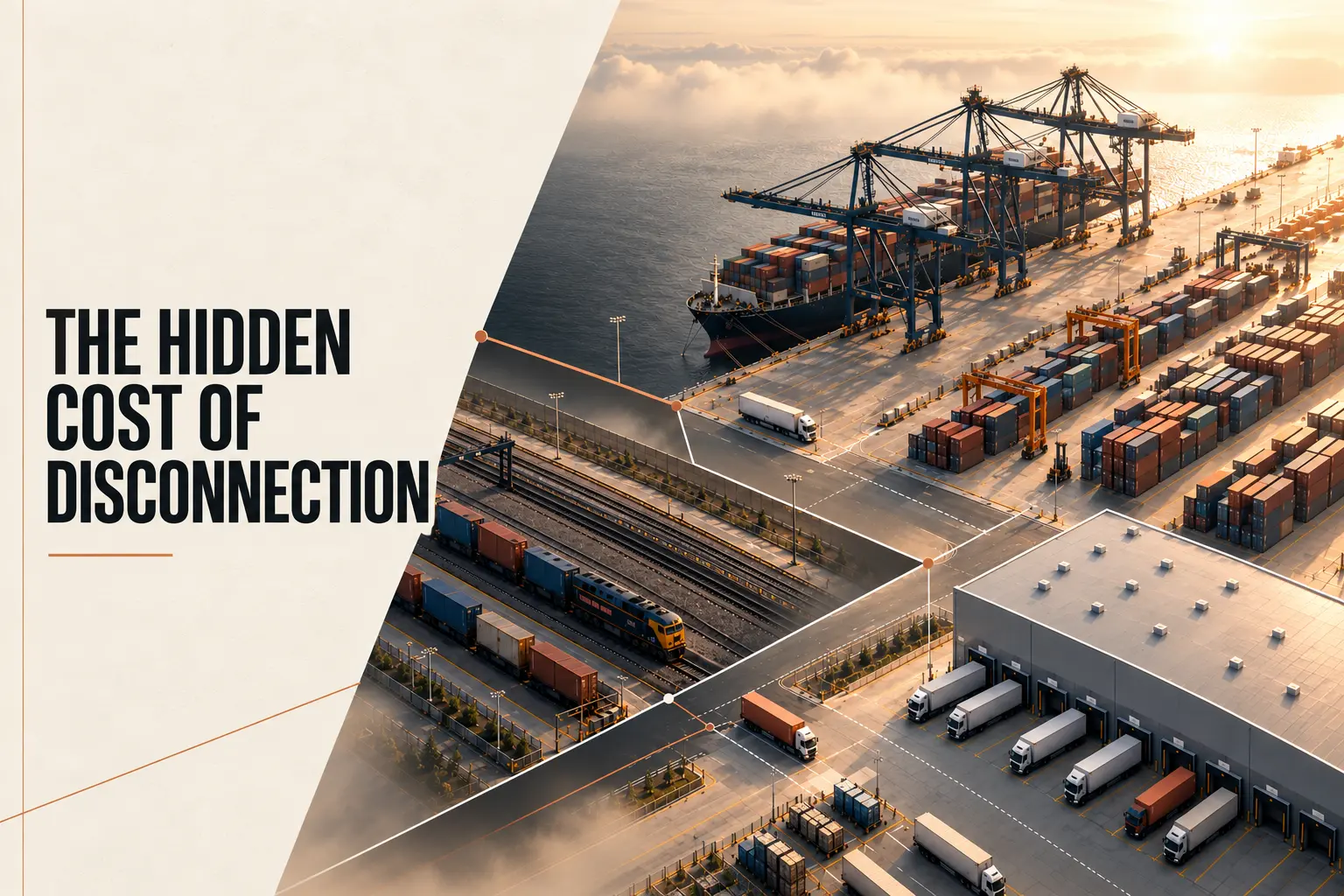
In today’s competitive business environment, supply chains involve multiple partners, including manufacturers, suppliers, transporters, warehouse operators, distributors and retailers. While each partner plays an important role, problems arise when these participants operate independently without proper coordination or information sharing.
This situation is known as supply chain fragmentation.
When every partner manages their own operations without understanding the bigger picture, businesses often experience delivery delays, increased operational costs, poor inventory management and communication gaps. These challenges can affect overall business performance and customer satisfaction.
What Is Supply Chain Fragmentation?
Supply chain fragmentation occurs when different participants in a supply chain work in separate systems, follow different processes and lack coordination with one another.
For example, a manufacturer may complete production on schedule, but the transporter might not receive timely dispatch information. Meanwhile, the warehouse may not be prepared to receive the shipment, and the distributor may have no visibility into the delivery status.
Although every individual partner may be performing their responsibilities, the overall supply chain becomes inefficient because the operations are not connected.
5 Major Costs of a Fragmented Supply Chain
1. Increased Transportation and Operational Costs
Poor coordination between supply chain partners can result in unnecessary transportation expenses. Delayed loading, unplanned vehicle arrangements, empty return trips and inefficient route planning can increase logistics costs.
When information is not shared on time, transporters may struggle to optimise vehicle utilisation and delivery schedules.
2. Poor Inventory Management
Fragmented supply chains often create gaps between actual inventory levels and the information available to different partners.
A distributor may expect a shipment that has not yet left the warehouse, while a manufacturer may continue production without knowing the latest demand situation.
This can lead to excess inventory, stock shortages and unnecessary storage expenses.
3. Delayed Deliveries and Missed Deadlines
When suppliers, warehouses and transportation providers operate independently, even a small communication gap can affect the entire delivery schedule.
For instance, if a warehouse is unaware of an incoming shipment, unloading arrangements may be delayed. Such disruptions can affect subsequent deliveries and business commitments.
4. Lack of Real-Time Supply Chain Visibility
Without connected systems and regular information sharing, businesses may struggle to track shipments, identify delays and understand where problems are occurring.
This lack of visibility makes decision-making difficult because managers often receive information only after an issue has already affected operations.
5. Poor Customer Experience
Ultimately, supply chain fragmentation affects customers.
Late deliveries, inaccurate shipment updates, product shortages and inconsistent service can reduce customer trust. Even when individual partners complete their assigned tasks, customers evaluate the performance of the entire supply chain.
Why Do Supply Chains Become Fragmented?
Several factors contribute to supply chain fragmentation:
- Disconnected Technology: Different partners use separate software systems that cannot exchange information effectively.
- Communication Gaps: Important updates are shared through delayed emails, calls or manual processes.
- Lack of Shared Planning: Suppliers, manufacturers and logistics providers follow different schedules and priorities.
- Limited Data Visibility: Partners do not have access to accurate and timely operational information.
- Unclear Responsibilities: Without proper coordination, businesses may struggle to identify who is responsible when disruptions occur.
How Can Businesses Reduce Supply Chain Fragmentation?
Building a connected supply chain requires collaboration, visibility and better operational planning.
1. Improve Partner Communication
Establish clear communication channels between suppliers, transporters, warehouse operators and distributors. Regular updates help everyone work towards common delivery objectives.
2. Adopt Integrated Digital Systems
Businesses should consider technology solutions that connect inventory, transportation, order management and shipment tracking. Integrated systems reduce manual information sharing and improve operational coordination.
3. Build Strong Logistics Partnerships
Working with reliable logistics partners can help businesses streamline transportation planning, improve delivery coordination and maintain better shipment visibility.
4. Use Data for Better Decision-Making
Sharing accurate operational data allows businesses to identify bottlenecks, monitor performance and make informed decisions before small issues become major disruptions.
5. Establish Shared Performance Indicators
Businesses should evaluate the entire supply chain rather than focusing only on individual partner performance. Metrics such as on-time delivery, order fulfilment, transportation cost and inventory accuracy provide a broader view of operational efficiency.
The Future Belongs to Connected Supply Chains
Supply chain efficiency is no longer determined only by how quickly products move from one location to another. It also depends on how effectively different partners communicate, coordinate and share information.
As businesses expand their operations and manage increasingly complex distribution networks, supply chain collaboration will become even more important.
Reducing fragmentation can help organisations improve delivery reliability, control logistics expenses, minimise operational disruptions and build stronger customer relationships.
Conclusion
A supply chain is only as strong as the coordination between its participants. When every partner operates in isolation, businesses face hidden costs that affect profitability and operational performance.
By investing in better communication, integrated technology and reliable logistics partnerships, organisations can move towards a more connected, transparent and efficient supply chain.
SK Translines understands the importance of reliable logistics coordination in modern business operations. With a focus on efficient transportation and logistics solutions, businesses can build stronger supply chain connections and improve the movement of goods.
Visit www.sktranslines.com to explore logistics solutions for your business.