


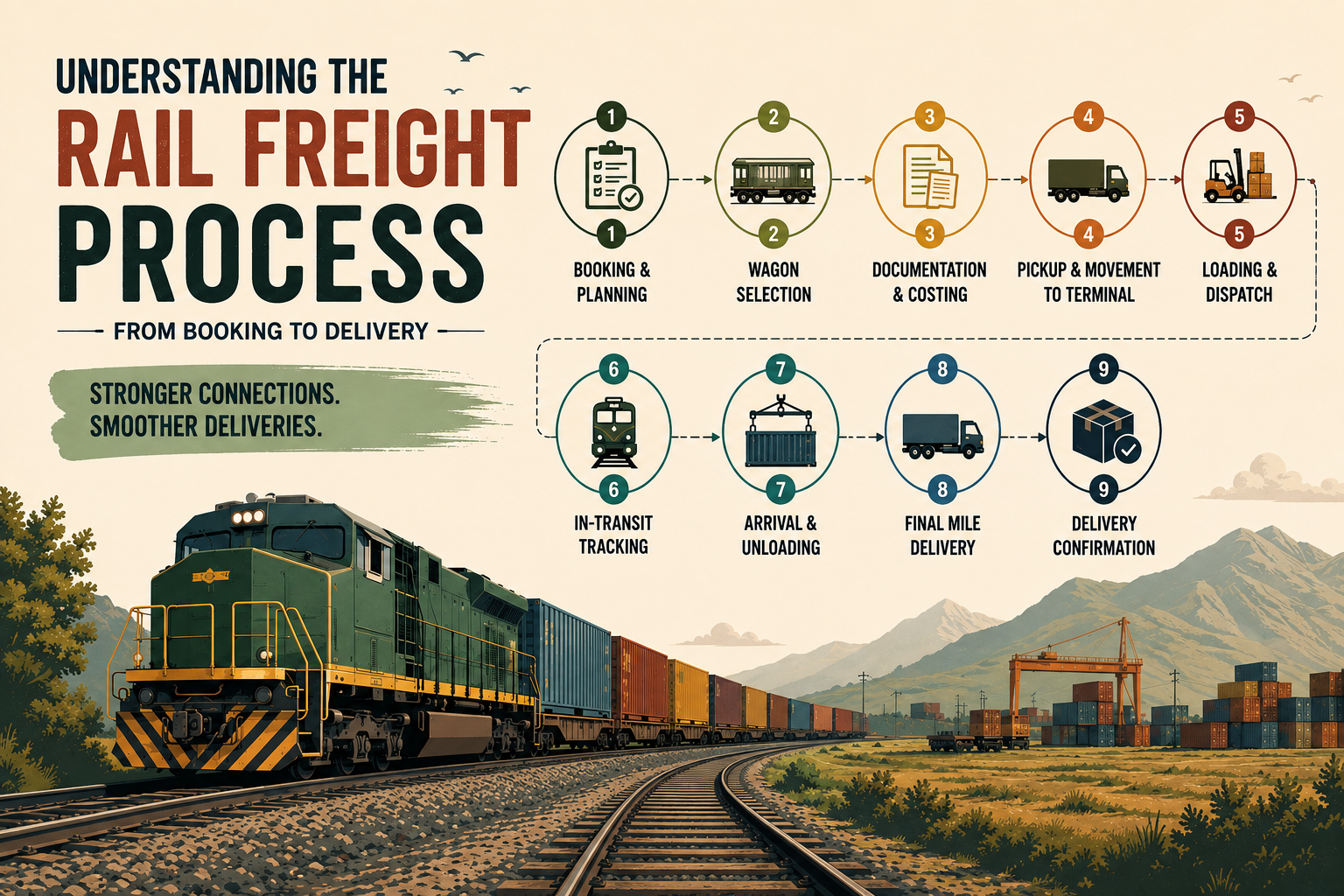
Rail freight is a reliable and cost-effective option for transporting heavy, bulky and high-volume goods over long distances. It is commonly used for industrial materials, machinery, packaged goods, vehicles, raw materials and bulk cargo.
The process involves more than simply loading goods onto a train. It requires coordination between road transporters, railway terminals, warehouse teams and the final delivery location.
Understanding each stage helps businesses plan shipments properly, reduce delays and improve cargo safety.
1. Shipment Booking and Planning
The rail freight process begins with booking and route planning.
The shipper provides details such as:
- Type of goods
- Total weight and volume
- Number of packages
- Pickup and delivery locations
- Preferred dispatch date
- Special handling requirements
Based on this information, the logistics provider selects the most suitable terminal, route and wagon type.
Accurate shipment details are important because incorrect weight, dimensions or cargo information can cause loading and documentation problems.
2. Selecting the Right Wagon
Different goods require different types of railway wagons.
Covered wagons may be used for packaged products that need protection from rain and dust. Open wagons may be suitable for certain bulk goods, while specialised wagons may be needed for containers, liquids, vehicles or heavy machinery.
The wagon is selected according to the cargo’s weight, size, nature and safety requirements.
Choosing the correct wagon helps reduce damage and ensures safe movement throughout the journey.
3. Cost Calculation and Documentation
After the shipment plan is finalised, the transportation cost is calculated.
The total amount may include railway freight, first-mile pickup, terminal handling, loading, unloading, documentation and final delivery charges.
The shipper must also prepare the required documents, which may include:
- Commercial invoice
- Packing list
- E-way bill
- Lorry receipt
- Railway receipt
- Insurance documents
- Cargo-related permits
Incomplete or incorrect paperwork can delay the shipment at the terminal. All information should therefore be checked before dispatch.
4. First-Mile Transportation
The goods are collected from the factory, warehouse or dispatch location and moved by road to the railway terminal.
Before pickup, the cargo should be properly packed, labelled, counted and weighed. The packaging should be strong enough to handle both road and rail movement.
Careful first-mile transportation protects the goods before they enter the railway network.
5. Terminal Inspection and Loading
Once the shipment reaches the terminal, the cargo and documents are verified.
The terminal team may check the package count, weight, packaging condition and visible damage. Any differences should be resolved before the goods are loaded.
The cargo is then placed inside the wagon using suitable equipment such as forklifts, cranes or conveyors.
During loading, the team must ensure proper weight distribution, safe stacking and strong cargo securing. Poor loading can cause the cargo to shift or become damaged during transit.
6. Railway Receipt and Dispatch
After the loading process is completed, a railway receipt is issued.
This document usually contains the shipment description, weight, origin, destination, freight details and booking information.
Once the train or rake is ready, the shipment is dispatched toward the destination terminal.
The railway receipt acts as an important record throughout the transportation process.
7. Shipment Tracking During Transit
While the shipment is moving, the logistics provider tracks its progress through railway updates and internal tracking systems.
Tracking helps businesses monitor:
- Dispatch status
- Current movement
- Expected arrival
- Route delays
- Terminal updates
Rail transit times may be affected by weather, congestion, railway operations or terminal availability. Regular monitoring allows the delivery team to plan the next stage in advance.
8. Arrival and Unloading
When the shipment reaches the destination terminal, the wagon, seal and documents are checked.
The goods are unloaded carefully and inspected for shortages, visible damage or packaging issues.
The receiving team may prepare a goods receipt note recording the quantity received, unloading details and condition of the cargo.
Any damage or shortage should be documented immediately.
9. Final-Mile Delivery
After unloading, the goods are transferred to a truck for delivery to the final customer, warehouse, factory or distribution centre.
This stage is known as final-mile delivery.
The logistics provider arranges the correct vehicle, delivery route, documents and unloading support. The consignee then verifies the cargo and signs the proof of delivery.
The shipment is considered complete once the goods are received and confirmed at the final destination.
Common Rail Freight Challenges
Rail freight is efficient, but businesses may still face challenges such as:
- Limited wagon availability
- Terminal congestion
- Documentation errors
- Loading and unloading delays
- Poor cargo securing
- Weather-related disruptions
- Coordination issues between rail and road teams
Advance planning and regular communication can reduce many of these risks.
Final Thoughts
Rail freight provides a dependable way to transport large and heavy shipments over long distances.
The complete process includes booking, documentation, first-mile pickup, terminal loading, railway movement, unloading and final delivery.
Each stage must be carefully coordinated to protect the cargo and maintain the delivery schedule.
By working with an experienced logistics provider, businesses can improve shipment visibility, reduce delays and make rail transportation more efficient.