


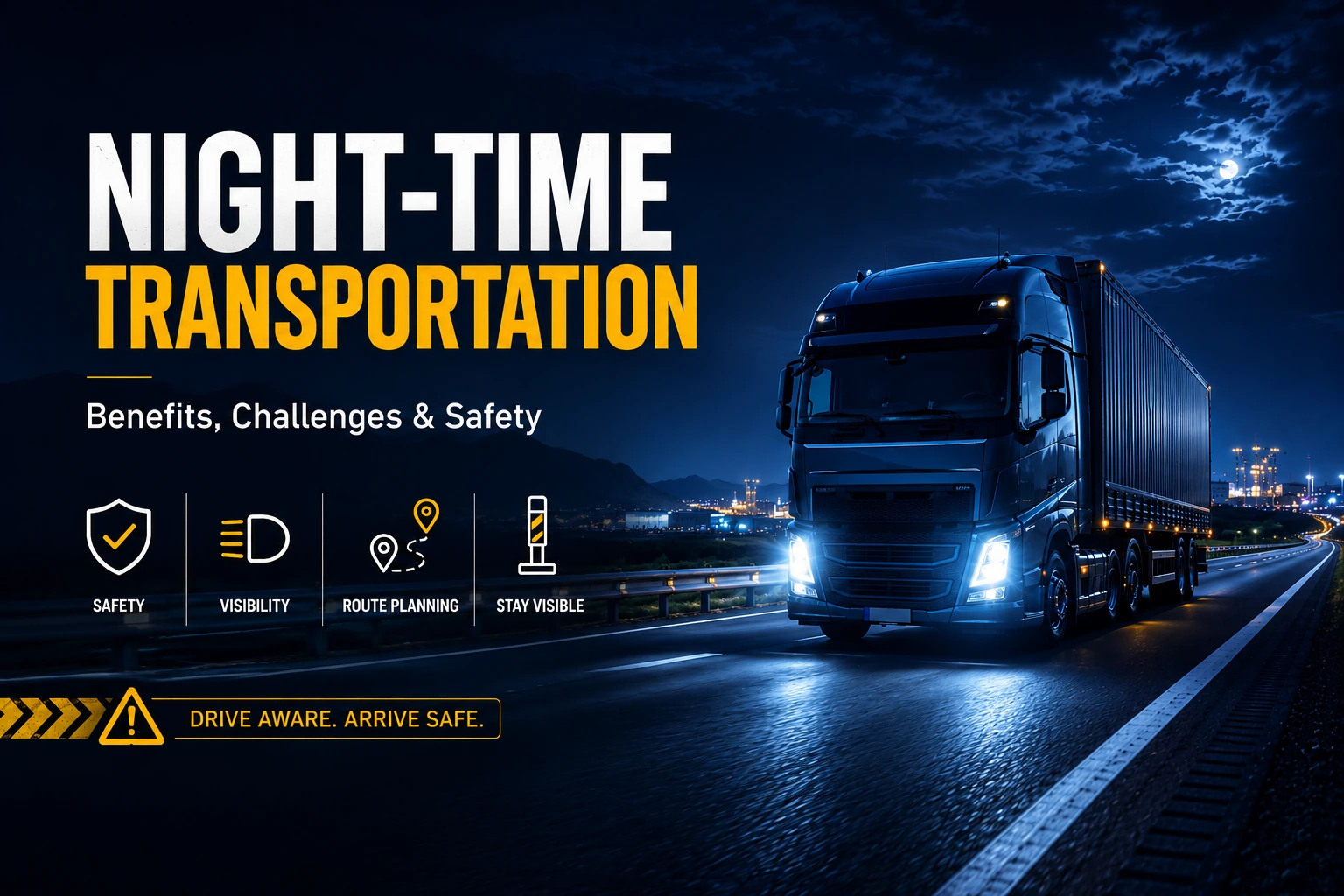
Transportation does not stop when the sun goes down. For logistics companies, manufacturers and distributors, night-time transportation can help reduce delays, improve vehicle utilisation and support faster deliveries.
However, driving at night also introduces challenges such as reduced visibility, driver fatigue and increased safety risks. Successful night transportation therefore requires careful planning, trained drivers and proper monitoring systems.
What Is Night-Time Transportation?
Night-time transportation refers to the movement of commercial goods during late-evening or early-morning hours. Depending on the route and delivery requirement, vehicles may travel partially or completely during the night.
It is commonly used for:
- Long-distance freight movement
- Time-sensitive deliveries
- Industrial and manufacturing shipments
- Retail and e-commerce distribution
- Perishable or temperature-sensitive goods
- Deliveries in cities with daytime vehicle restrictions
Benefits of Night-Time Transportation
1. Less Traffic Congestion
Roads are generally less crowded at night, particularly around cities and major industrial areas. Reduced congestion allows commercial vehicles to maintain a more consistent speed and avoid frequent stops.
This can result in shorter transit times and more predictable delivery schedules.
2. Faster Movement of Goods
With fewer traffic interruptions, trucks can cover longer distances in less time. Night transportation is especially useful when businesses need to meet urgent dispatch or early-morning delivery deadlines.
3. Better Vehicle Utilisation
Night operations allow logistics companies to use their vehicles beyond regular daytime hours. A truck that completes deliveries during the day may be scheduled for another trip at night, depending on driver availability and mandatory rest requirements.
Better vehicle utilisation can improve fleet productivity and operational efficiency.
4. Improved Delivery Planning
Many warehouses, factories and distribution centres operate around the clock. Night transportation allows shipments to arrive before the next working shift begins.
This helps businesses prepare stock, production materials or customer orders without interrupting daytime operations.
5. Reduced Fuel Consumption
Heavy traffic, frequent braking and long periods of idling can increase fuel consumption. Smoother night-time traffic may help vehicles maintain steady speeds and improve fuel efficiency.
However, the actual savings depend on the route, vehicle condition, load and driving behaviour.
6. Easier Movement in Restricted Areas
Some cities restrict the entry of heavy commercial vehicles during busy daytime hours. Night operations allow transporters to enter these areas during permitted time windows and complete deliveries with fewer disruptions.
Challenges of Night-Time Transportation
1. Reduced Visibility
Dark roads make it more difficult to identify potholes, sharp turns, pedestrians, animals and stationary vehicles. Rain, fog and glare from headlights can further reduce visibility.
Drivers must maintain safe speeds and keep sufficient distance from other vehicles.
2. Driver Fatigue
Fatigue is one of the biggest risks associated with night driving. The human body naturally becomes less alert during late-night and early-morning hours.
Long working hours, insufficient sleep and irregular schedules can reduce reaction time and decision-making ability.
3. Poorly Lit Roads
Many highways, rural routes and industrial roads may not have adequate street lighting. Missing signs, unmarked diversions and damaged road surfaces can become difficult to notice at night.
4. Limited Roadside Assistance
Repair shops, fuel stations, restaurants and medical facilities may be closed or less accessible during late hours. A breakdown on a remote route can therefore cause longer delays.
5. Security Risks
Cargo theft, unauthorised vehicle stops and unsafe parking locations can create additional risks during night transportation. High-value shipments may require stronger tracking, communication and route-control measures.
6. Weather-Related Difficulties
Fog, rain and winter conditions can become more dangerous at night because visibility is already limited. Drivers may find it difficult to estimate distance or identify hazards in poor weather.
Essential Safety Measures for Night Transportation
1. Check the Vehicle Before Dispatch
Every vehicle should undergo a proper pre-trip inspection before beginning a night journey.
The inspection should cover:
- Headlights, indicators and brake lights
- Tyres and air pressure
- Brakes and steering
- Windscreen and wipers
- Reflective tape and safety markings
- Fuel and fluid levels
- GPS and communication systems
- Emergency equipment
Any issue affecting vehicle safety should be resolved before departure.
2. Plan Driver Shifts Carefully
Drivers should receive adequate rest before beginning a night trip. Transport companies must avoid assigning unrealistic schedules that encourage continuous driving without proper breaks.
Driver rotation may be considered for long-distance routes where operationally practical.
3. Schedule Regular Rest Breaks
Drivers should take planned breaks at safe locations. Short rest periods can help reduce fatigue and restore alertness.
Drivers experiencing heavy eyes, repeated yawning, poor concentration or difficulty maintaining lane position should stop at a secure location instead of continuing the journey.
4. Use GPS and Real-Time Tracking
GPS tracking allows the operations team to monitor the vehicle’s route, speed, stops and expected arrival time.
Real-time monitoring can also help identify:
- Unplanned route deviations
- Excessive stoppages
- Speeding
- Long periods of inactivity
- Possible breakdowns
- Delayed deliveries
Tracking should be supported by regular communication between the driver and transport control team.
5. Maintain Safe Driving Speeds
Drivers should reduce speed when visibility is poor or road conditions are uncertain. Driving within the legal speed limit may not always be enough; the speed must also be suitable for the road, weather and load.
Sudden braking and aggressive overtaking should be avoided.
6. Keep a Safe Following Distance
Commercial vehicles require more distance to stop, especially when carrying heavy loads. A safe gap gives the driver more time to react to unexpected hazards.
The following distance should be increased during rain, fog or poor road conditions.
7. Keep the Windscreen and Mirrors Clean
Dust, moisture and glare can significantly affect visibility at night. The windscreen, side mirrors and headlights should be cleaned before dispatch and whenever required during the journey.
8. Secure the Cargo Properly
Cargo should be evenly distributed and firmly secured before the vehicle leaves the loading point. Unbalanced or loose cargo can affect steering, braking and vehicle stability.
The load should be checked again after travelling a reasonable distance, particularly when carrying heavy or irregularly shaped goods.
9. Select Safe Routes and Parking Locations
Transport planners should identify suitable highways, fuel stations, rest areas, checkpoints and emergency facilities in advance.
Drivers should avoid isolated or unauthorised parking locations, especially when transporting valuable goods.
10. Carry Emergency Equipment
Night-operated vehicles should carry essential emergency items such as:
- Reflective warning triangles
- Torch or emergency light
- First-aid kit
- Fire extinguisher
- Reflective safety jacket
- Basic repair tools
- Spare tyre
- Emergency contact details
- Charged communication devices
These items can improve safety and visibility during breakdowns or roadside emergencies.
Role of Technology in Safer Night Transportation
Modern fleet technology can make night-time transportation safer and more reliable.
Useful systems include:
- GPS vehicle tracking
- Driver behaviour monitoring
- Fatigue and distraction alerts
- Speed monitoring
- Route deviation alerts
- Geofencing
- Vehicle maintenance reminders
- Emergency communication systems
- Electronic proof of delivery
Technology cannot replace responsible driving, but it can help transport teams identify risks and respond more quickly.
Tips for Drivers During Night Journeys
Drivers should stay hydrated and eat light meals before and during the journey. Heavy meals may increase drowsiness.
They should also avoid depending on loud music, open windows or excessive caffeine as substitutes for proper sleep. These methods may provide temporary alertness but do not remove fatigue.
The safest response to serious tiredness is to stop at a secure place and rest.
How Transport Companies Can Improve Night Operations
A reliable night transportation system requires more than assigning a truck and driver. Transport companies should create clear procedures covering:
- Driver fitness and rest
- Vehicle inspections
- Route planning
- Weather assessment
- Cargo security
- Emergency response
- Live vehicle monitoring
- Delivery communication
- Incident reporting
Regular driver training and review of route incidents can further strengthen safety performance.
Final Thoughts
Night-time transportation offers important advantages, including lower traffic congestion, faster transit, better fleet utilisation and improved delivery scheduling.
At the same time, reduced visibility, fatigue, road conditions and security risks require careful management.
With well-maintained vehicles, rested drivers, proper route planning and real-time monitoring, logistics companies can make night transportation safer, faster and more dependable.
The objective should not simply be to complete the journey quickly, but to ensure that the driver, vehicle and cargo reach the destination safely.