


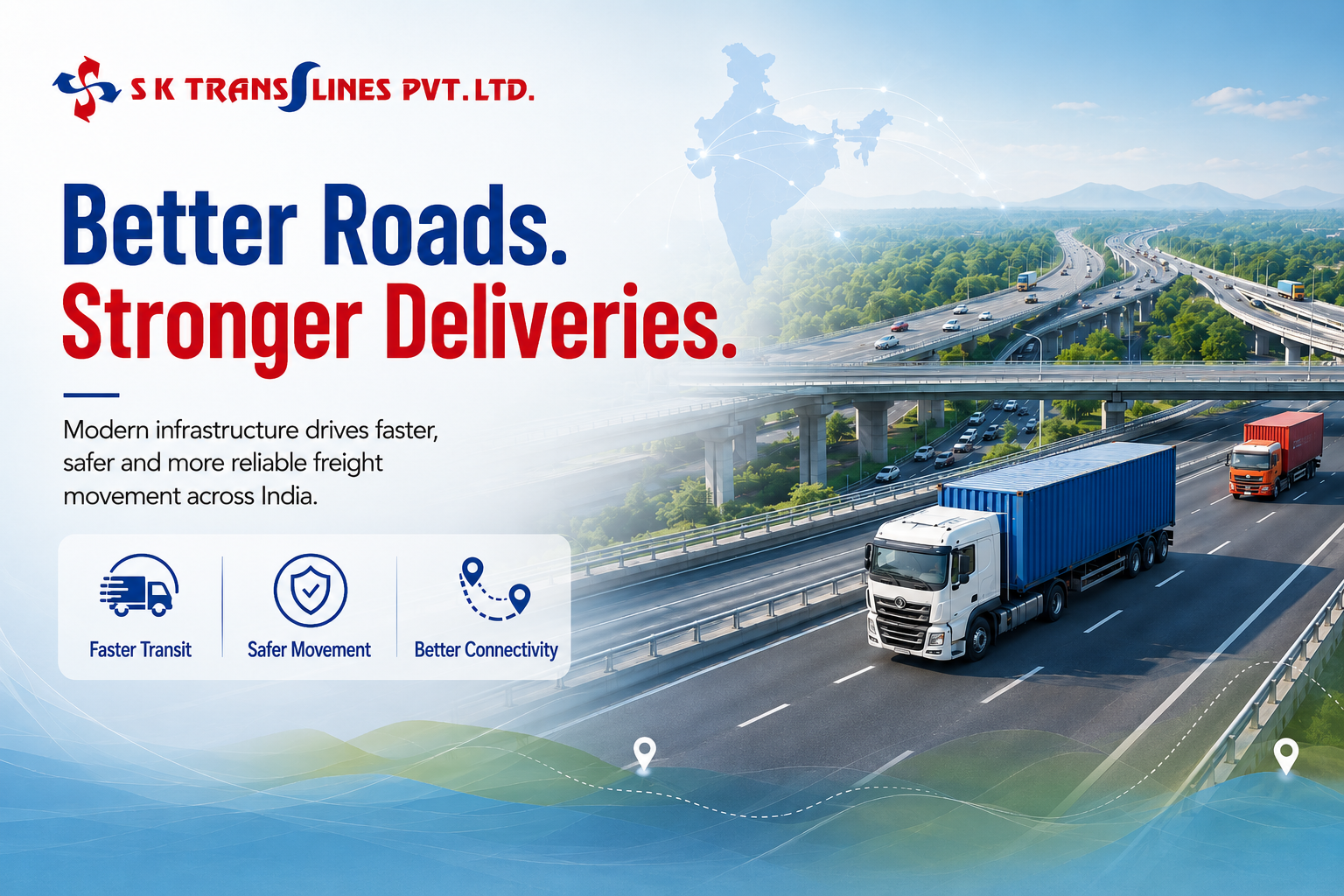
India’s logistics industry depends heavily on road transportation. From factories and warehouses to retail markets and customer locations, roads play a major role in keeping goods moving across the country. For manufacturers, traders, distributors and logistics companies, better road infrastructure directly improves freight movement, delivery speed and supply chain reliability.
As India continues to improve highways, expressways, bridges and regional road connectivity, the freight transportation sector is becoming more efficient. Better roads do not only reduce travel time. They also help improve safety, reduce vehicle damage, lower fuel consumption and create stronger connections between production centers and consumption markets.
Faster Movement of Goods
One of the biggest benefits of better road infrastructure is faster freight movement. When highways are wider, smoother and better connected, trucks can cover long distances more efficiently.
Poor roads often lead to slow vehicle movement, traffic congestion and unnecessary delays. On the other hand, well-planned highways and expressways help transporters maintain better speed and reduce travel uncertainty.
For businesses, this means faster movement of raw materials, finished goods and urgent shipments.
Better Connectivity Between Cities and Industrial Areas
India has many manufacturing hubs, ports, warehouses and consumption markets spread across different states. Strong road infrastructure connects these locations more smoothly.
Better connectivity helps businesses move goods from factories to warehouses and from warehouses to customers with fewer route challenges. It also supports movement between metro cities, tier-2 cities, industrial clusters and remote regions.
This is especially important for industries that depend on regular freight movement such as FMCG, automobiles, construction material, machinery, steel, textiles and agriculture-based businesses.
Reduced Transit Delays
Transit delays are a major challenge in logistics. Bad roads, narrow routes, damaged bridges and poor connectivity can slow down freight movement. These delays affect production schedules, customer commitments and inventory planning.
Improved road infrastructure helps reduce such delays. Better highways, bypass roads, flyovers and smoother route networks allow trucks to move with fewer interruptions.
When transit becomes more predictable, businesses can plan dispatches and deliveries with greater confidence.
Lower Vehicle Maintenance Costs
Poor road conditions can damage tyres, suspension, brakes and other important vehicle parts. For transporters, this increases maintenance costs and creates a higher risk of breakdowns during transit.
Better roads reduce the stress on commercial vehicles. Trucks can travel more smoothly, which helps improve vehicle life and reduce unexpected repair costs.
For logistics companies, lower maintenance pressure means better fleet availability and fewer delivery failures.
Improved Fuel Efficiency
Road quality has a direct impact on fuel consumption. Vehicles use more fuel when they frequently stop, slow down, take diversions or travel through rough road conditions.
Better road infrastructure supports smoother movement and better average speed. This helps reduce fuel wastage and improves operational efficiency.
For transporters, fuel efficiency is extremely important because fuel is one of the biggest costs in freight movement. Better roads can help create cost benefits for both transport companies and their customers.
Safer Freight Transportation
Safety is one of the most important parts of logistics. Poor roads, sharp turns, damaged surfaces and badly planned routes increase the risk of accidents, cargo damage and driver fatigue.
Improved road infrastructure makes freight movement safer. Better road surfaces, proper signage, lighting, lane discipline and emergency support help drivers move with more confidence.
Safer roads protect goods, drivers and vehicles. They also help businesses reduce loss caused by accidents or damaged cargo.
Support for Heavy Commercial Vehicles
Heavy freight movement requires strong and reliable roads. Large commercial vehicles carrying heavy cargo need roads that can handle weight, long-distance movement and smooth turning space.
Better road infrastructure supports the movement of trailers, container trucks and multi-axle vehicles. This is important for industries that move heavy machinery, construction material, industrial goods and bulk cargo.
When road networks are designed for heavy vehicles, transporters can move large shipments more safely and efficiently.
Stronger Regional and Rural Supply Chains
Logistics is not limited to major cities. Many businesses need to reach smaller towns, rural markets and regional distribution points. Better road infrastructure helps improve last-mile and regional freight movement.
When rural and semi-urban roads are improved, goods can reach more markets on time. This supports business expansion, agricultural movement, retail distribution and regional economic growth.
Better road access also helps transporters plan more reliable routes to areas that were earlier difficult to serve.
Better Inventory and Supply Chain Planning
When freight movement is unpredictable, businesses often keep extra stock to avoid shortages. This increases inventory cost and blocks working capital.
Better roads improve delivery reliability. When companies know that goods can reach on time, they can plan inventory more efficiently.
This helps businesses reduce storage pressure, improve stock rotation and manage demand more effectively.
Boost to Multimodal Logistics
Road transport works closely with railways, ports, warehouses and logistics parks. Better road infrastructure improves connectivity to these important freight points.
When roads connect smoothly with railway terminals, ports and industrial corridors, goods can move faster between different modes of transport. This supports multimodal logistics and helps businesses choose the most efficient transport combination.
For long-distance freight, strong road connectivity with rail and warehouse networks can improve overall supply chain performance.
Better Customer Experience
Customers expect timely delivery and clear communication. Road delays often affect customer satisfaction, especially when goods are time-sensitive.
Better road infrastructure helps logistics companies provide more dependable delivery timelines. When goods arrive safely and on time, customers gain confidence in the business.
Reliable freight movement improves the overall customer experience and strengthens long-term business relationships.
Growth Opportunities for Logistics Companies
Improved road infrastructure creates new opportunities for transport companies. They can serve more routes, expand into new regions and handle higher freight volumes.
Good road networks also allow better fleet utilization because vehicles spend less time stuck in delays or breakdowns. This helps logistics companies improve productivity and service quality.
For transporters, better roads are not just infrastructure improvements. They are growth enablers.
Conclusion
Better road infrastructure has a direct and positive impact on freight movement in India. It improves delivery speed, safety, vehicle efficiency, fuel savings, regional connectivity and customer satisfaction.
For businesses, good roads mean smoother supply chains and more reliable logistics performance. For transporters, they mean safer routes, better fleet utilization and stronger service delivery.
As India continues to improve its road network, logistics companies and businesses will benefit from faster, safer and more efficient movement of goods. Strong road infrastructure is not just important for transport. It is essential for the growth of India’s economy and supply chain ecosystem.