


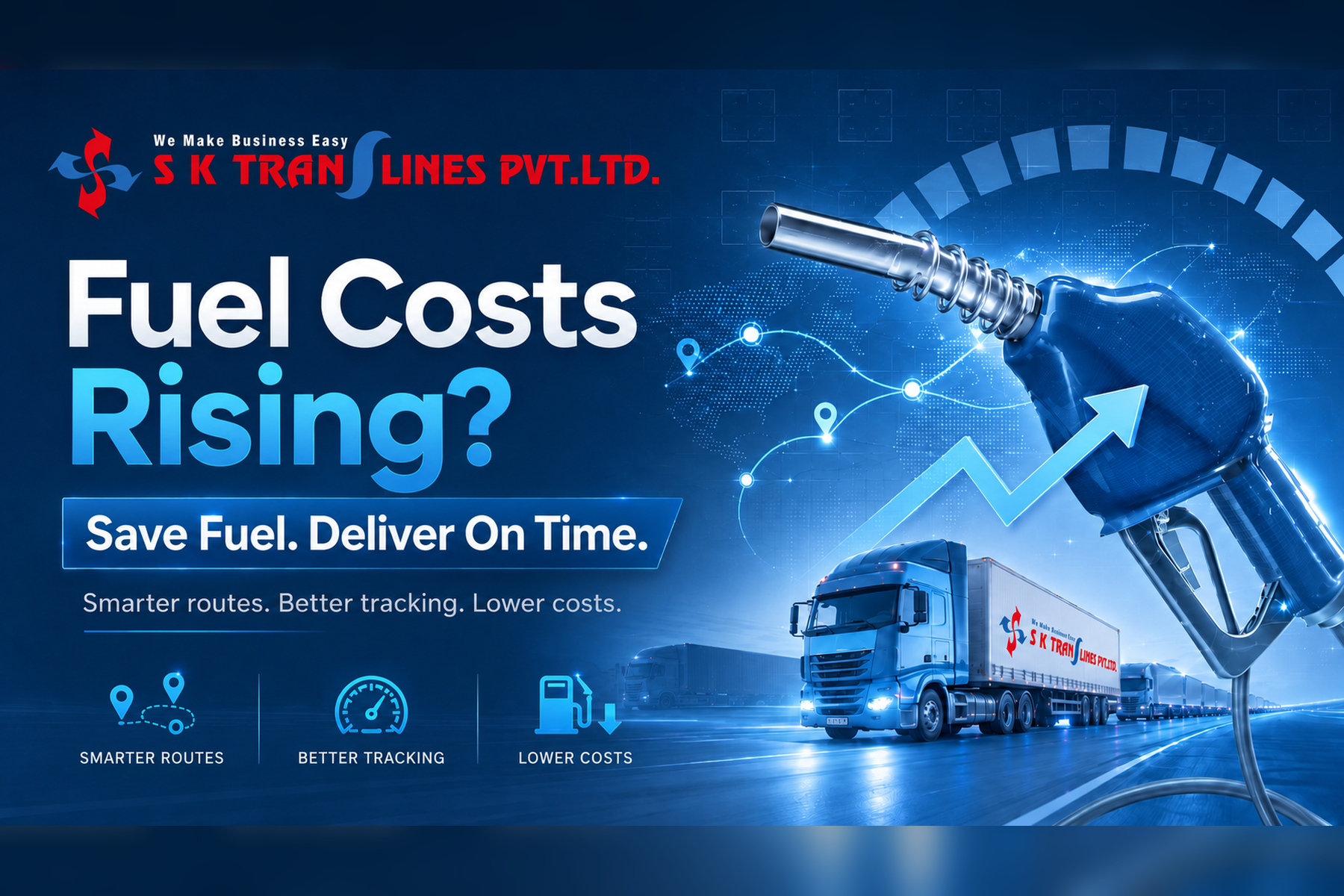
Fuel is one of the biggest operating costs in the logistics industry. For transport companies, even a small reduction in fuel usage can improve profitability, reduce wastage and support more sustainable operations.
However, fuel saving should never come at the cost of delayed deliveries. Customers expect their goods to move on time, especially when businesses depend on reliable transport schedules. The real challenge is finding smarter ways to reduce fuel consumption while maintaining delivery speed, safety and service quality.
At SK Translines Pvt. Ltd., efficient transportation is not just about moving goods from one place to another. It is about planning better, using resources wisely and ensuring dependable delivery performance. Here are some practical ways logistics companies can reduce fuel consumption without affecting delivery timelines.
1. Plan Smarter Routes
Route planning plays a major role in fuel consumption. Longer routes, traffic congestion, poor road conditions and unnecessary detours can increase fuel usage.
Logistics companies can reduce fuel consumption by using better route planning and optimization methods. These help identify the most efficient routes by considering distance, traffic, road quality, toll points and delivery priorities.
A better route does not always mean the shortest route. Sometimes, a slightly longer but smoother route can save more fuel and reduce travel time. Smart route planning helps transport companies save fuel while keeping deliveries on schedule.
2. Reduce Empty Vehicle Movement
Empty return trips are one of the biggest causes of fuel wastage in logistics. When trucks travel without load, companies still spend on fuel, driver time, tolls and vehicle maintenance.
To reduce this, transport companies should plan return loads wherever possible. Coordinating pickups and deliveries in nearby locations can help improve vehicle utilization and reduce empty kilometres.
Better load planning allows logistics companies to increase profitability while maintaining efficient delivery operations.
3. Maintain Vehicles Regularly
Poor vehicle maintenance directly affects fuel efficiency. Issues such as low tyre pressure, dirty air filters, engine problems and poor wheel alignment can make a truck consume more fuel than required.
Regular maintenance keeps vehicles fuel efficient and road ready. Tyres should be checked frequently, engines should be serviced on time and small mechanical issues should be fixed before they turn into major breakdowns.
A well-maintained vehicle not only saves fuel but also reduces the risk of delays during delivery.
4. Train Drivers for Fuel-Efficient Driving
Driver behaviour has a strong impact on fuel consumption. Sudden braking, harsh acceleration, unnecessary idling, overspeeding and poor gear usage can increase fuel usage.
Logistics companies should train drivers in fuel-efficient driving practices. Simple habits like maintaining a steady speed, avoiding aggressive driving, reducing idle time and using the right gear can make a major difference.
Driver training should not focus only on safety. It should also include fuel-saving habits that improve overall transport efficiency.
5. Use GPS Tracking and Vehicle Monitoring
GPS tracking helps logistics companies monitor vehicle movement in real time. It allows teams to identify route deviations, unnecessary stoppages, idling time and inefficient driving patterns.
With live tracking, logistics managers can guide drivers better and take quick decisions during traffic delays, route disruptions or unexpected stoppages.
Vehicle monitoring systems also help companies understand fuel usage patterns and improve future fleet planning.
6. Avoid Overloading and Poor Load Distribution
Overloading increases fuel consumption and puts extra pressure on the vehicle. It can also damage tyres, reduce vehicle life and create safety risks.
Poor load distribution can affect vehicle balance and fuel efficiency. Logistics companies should ensure that cargo is loaded properly and within legal weight limits.
Proper load planning helps maintain fuel efficiency while keeping deliveries safe, stable and timely.
7. Reduce Engine Idling
A lot of fuel is wasted when vehicles remain idle at warehouses, checkpoints, loading points and traffic stops. Long idling may seem like a small issue, but across multiple vehicles and trips, it creates a major fuel loss.
Drivers should be encouraged to switch off the engine during long waiting periods. Companies can also monitor idling time through telematics and vehicle tracking systems.
Reducing idle time helps save fuel without affecting delivery performance.
8. Improve Delivery Scheduling
Poor scheduling can lead to waiting time, traffic delays and repeated trips. When vehicles arrive too early or too late at loading and unloading points, fuel is wasted during waiting and rerouting.
Better scheduling helps reduce congestion at warehouses and improves vehicle turnaround time. Logistics companies should coordinate with customers, warehouses and drivers to ensure smoother loading and unloading.
Efficient scheduling saves both fuel and time.
9. Use Technology for Better Fleet Decisions
Technology helps logistics companies make smarter operational decisions. Fleet management software can track fuel consumption, route performance, driver behaviour, vehicle condition and delivery timelines.
With proper data, companies can identify which routes consume more fuel, which vehicles need maintenance and which driving habits need improvement.
Data-driven fleet management helps reduce fuel costs without slowing down deliveries.
10. Choose the Right Vehicle for the Right Load
Using the wrong vehicle for a shipment can lead to unnecessary fuel consumption. A vehicle that is too large for a small shipment wastes capacity, while a vehicle that is too small may require multiple trips.
Logistics companies should match the vehicle type with cargo size, weight, destination and delivery urgency.
The right vehicle selection improves fuel efficiency, reduces cost and ensures timely delivery.
Conclusion
Reducing fuel consumption does not mean slowing down deliveries. It means improving planning, monitoring, maintenance, driver efficiency and fleet utilization.
For logistics companies, fuel efficiency is not just a cost-saving strategy. It is a sign of better management, stronger operations and more reliable delivery service.
At SK Translines Pvt. Ltd., the focus is on delivering goods efficiently, safely and on time through smarter logistics practices. By using better routes, reducing empty trips, maintaining vehicles, training drivers and adopting technology, transport companies can reduce fuel consumption while continuing to meet customer expectations.