


Introduction
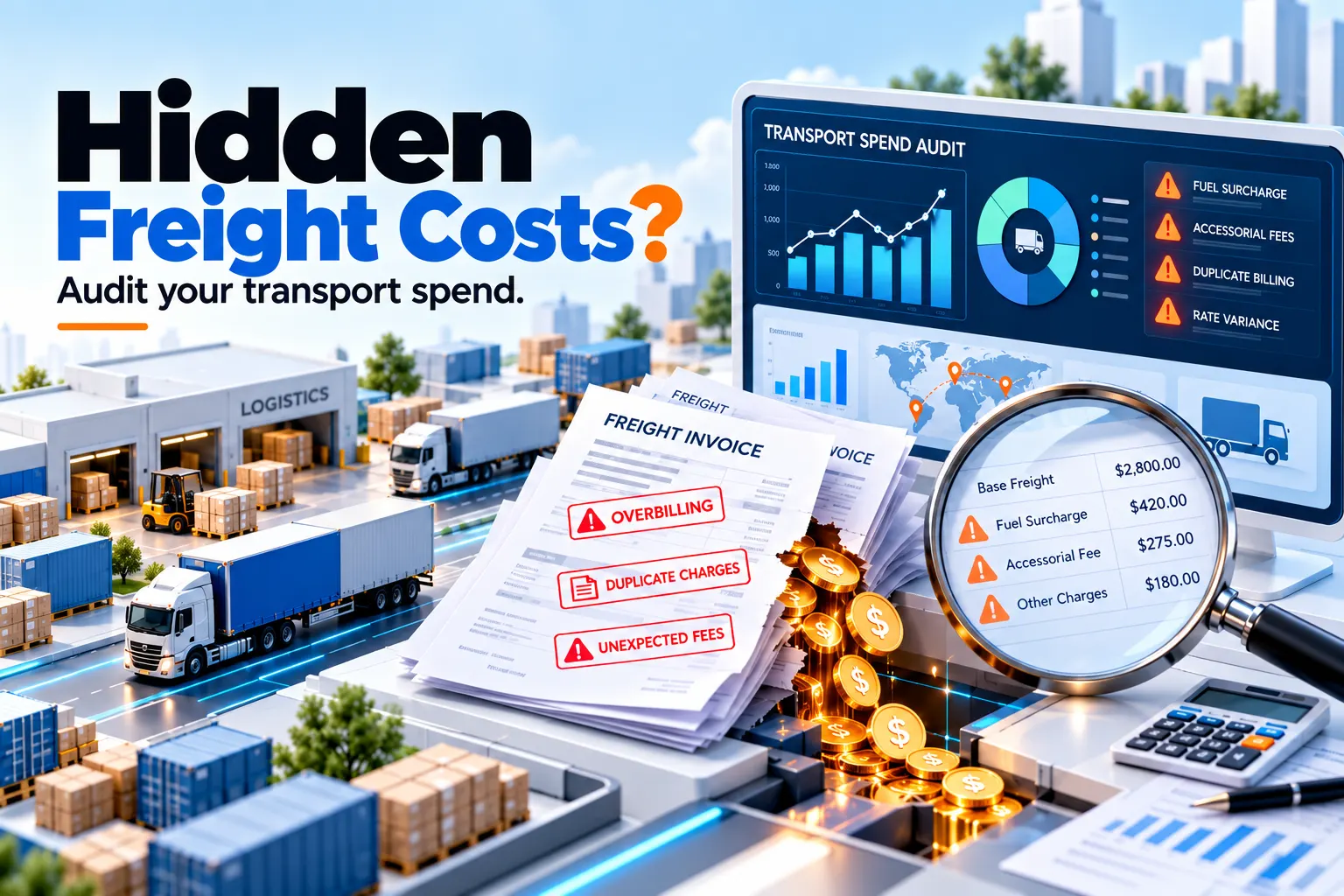
Transportation is one of the major expenses in supply chain management. However, many businesses struggle to understand why their freight budgets keep increasing even when shipment volumes remain relatively stable. Hidden charges, billing errors, inefficient routes, and poor shipment documentation can gradually increase transportation costs without being noticed.
This is where freight auditing becomes important. By reviewing transportation invoices, shipment records, and contractual rates, businesses can identify unnecessary expenses and improve cost control.
What Is Freight Audit?
Freight audit is the process of checking transportation invoices against agreed freight rates, shipment details, delivery records, and other supporting documents.
The objective is to ensure that businesses pay the correct amount for transportation services. It also helps identify billing discrepancies, duplicate charges, and expenses that do not match the original agreement.
Regular freight audits provide better visibility into transportation spending and help businesses make informed logistics decisions.
What Is Freight Cost Leakage?
Freight cost leakage refers to money lost through avoidable transportation expenses, billing errors, operational inefficiencies, or charges that go unnoticed.
These costs may appear small in individual shipments, but they can accumulate significantly across hundreds or thousands of deliveries.
Here are some common causes of freight cost leakage.
1. Incorrect Freight Billing
Transportation invoices may contain incorrect shipment weights, distances, agreed rates, or additional service charges. If these errors are not identified, businesses may end up paying more than they should.
Comparing invoices with contracts and shipment records can help detect such discrepancies.
2. Hidden and Additional Charges
Unexpected expenses such as detention fees, waiting charges, handling fees, and additional delivery costs can increase the final transportation bill.
Some charges may be legitimate, but businesses should verify whether they were agreed upon and correctly applied.
3. Inefficient Route Planning
Poor route selection, unnecessary detours, and inadequate trip planning can increase fuel consumption and transportation expenses.
Optimising routes and monitoring vehicle movement can help reduce avoidable costs while improving delivery efficiency.
4. Underutilised Vehicle Capacity
When trucks operate with unused cargo space, businesses may pay for transportation capacity they are not fully utilising.
Better shipment consolidation and load planning can improve vehicle utilisation and reduce the cost per shipment.
5. Duplicate Payments and Documentation Errors
Duplicate invoices, incorrect shipment references, and missing delivery records can create payment discrepancies.
Maintaining accurate documentation and implementing systematic invoice verification processes can help businesses prevent these issues.
How Freight Auditing Helps Control Transportation Costs
A structured freight audit process allows businesses to understand where their transportation budget is being spent.
Key practices include:
- Verify freight rates: Compare invoices with agreed contractual rates.
- Match shipment documents: Cross-check invoices against consignment notes, proof of delivery, and shipment records.
- Review additional charges: Confirm that extra fees are valid and supported by documentation.
- Track cost trends: Monitor transportation expenses across routes, carriers, and shipment types.
- Resolve discrepancies promptly: Establish a process for questioning incorrect invoices before payment.
These steps can improve financial transparency and strengthen relationships with logistics partners.
The Role of Technology in Freight Cost Management
Technology is making freight auditing more efficient by reducing manual checks and improving data visibility.
Digital freight management systems can help businesses organise shipment information, compare transportation costs, monitor delivery performance, and identify unusual expenses.
Data analytics can also reveal patterns such as consistently expensive routes, repeated detention charges, or carriers with frequent billing discrepancies.
When combined with accurate documentation and regular reviews, these tools help businesses make better transportation decisions.
Best Practices to Prevent Freight Cost Leakage
Businesses can take several practical steps to improve freight cost control:
- Maintain updated agreements with transportation providers.
- Establish a standard process for invoice approval.
- Monitor transportation spending against the allocated budget.
- Track recurring additional charges and investigate their causes.
- Review carrier performance and route efficiency regularly.
- Maintain accurate digital records of shipments and payments.
Freight auditing should be an ongoing activity rather than a one-time financial review.
Conclusion
Freight cost leakage can affect profitability without being immediately visible. Incorrect invoices, additional charges, inefficient routes, and documentation errors can gradually increase transportation expenses.
By adopting regular freight audits, using reliable shipment data, and monitoring logistics performance, businesses can improve cost transparency and identify opportunities to control spending.
Effective transportation management is not only about moving goods from one location to another. It is also about ensuring that every shipment is planned, tracked, and billed accurately.
Looking for reliable transportation and logistics support for your business? Visit SK Translines to explore freight and logistics solutions for your transportation requirements.