


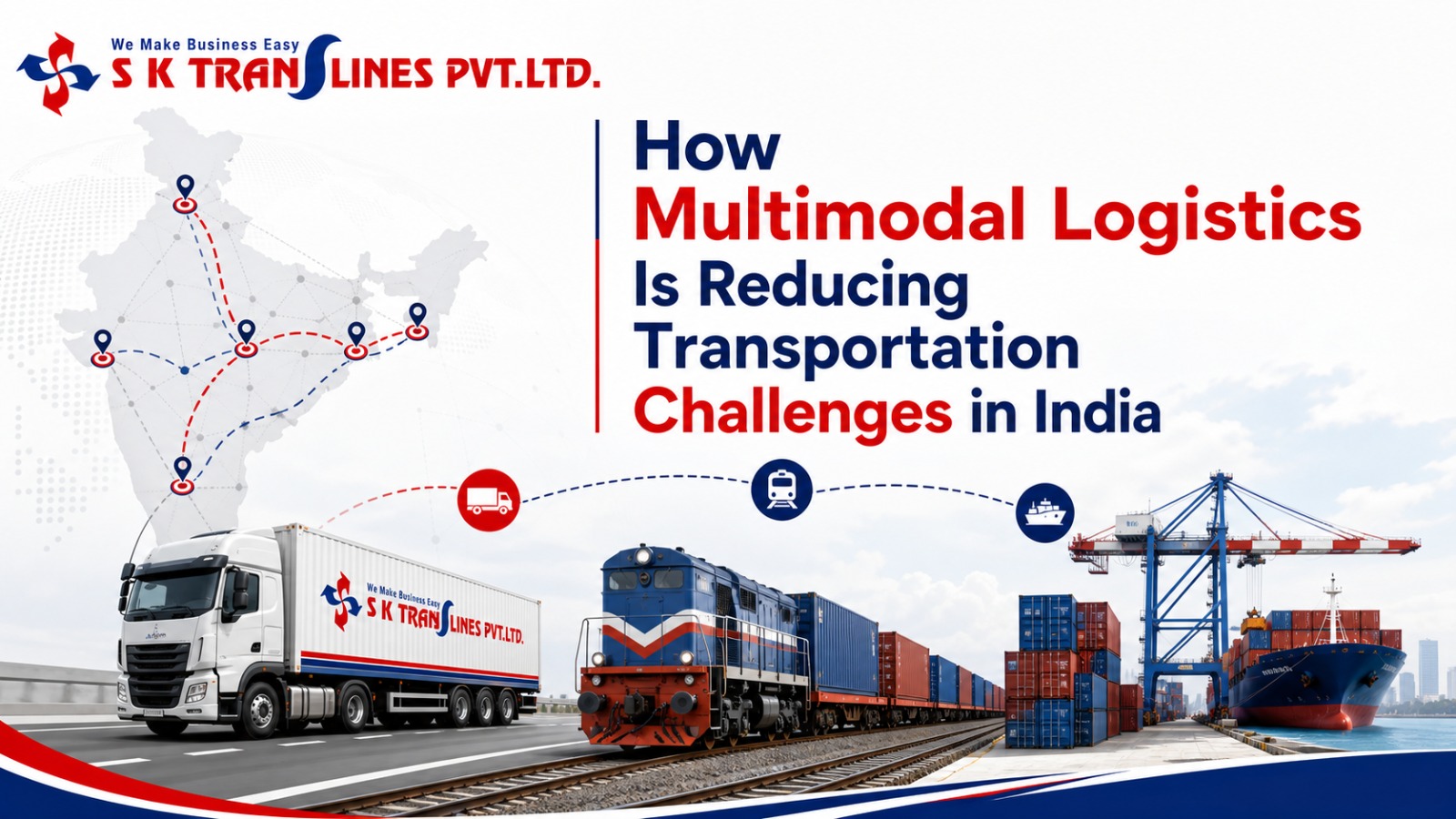
India is a vast country with different industries, long transport routes, changing road conditions and growing demand for faster deliveries. For many businesses, moving goods from one state to another is not just about booking a truck. It involves cost planning, route selection, cargo safety, delivery timelines, documentation and coordination between multiple teams.
This is where multimodal logistics is becoming increasingly important.
Multimodal logistics means using more than one mode of transport, such as road and rail, to move goods efficiently from the pickup point to the final destination. Instead of depending only on road transport or only on rail freight, businesses can use a smarter combination of both.
What Is Multimodal Logistics?
Multimodal logistics is a transportation system where goods are moved using two or more modes of transport under a coordinated logistics plan. For example, goods may first be picked up by road from a factory, then moved through rail for the long-distance journey and finally delivered again by road to the customer’s location.
This model is useful because every transport mode has its own strength. Road transport provides flexibility and door-to-door reach, while rail transport is suitable for long-distance and bulk cargo movement.
When both are planned properly, businesses get better control over cost, time and reliability.
Why India Needs Multimodal Logistics
India’s logistics network handles goods across long distances, industrial belts, ports, warehouses, rural markets and urban destinations. Depending only on one mode of transport can create challenges such as high freight cost, road congestion, vehicle delays, fuel price impact and limited capacity during peak demand.
Government initiatives like PM GatiShakti and the National Logistics Policy also focus on improving multimodal connectivity, integrated planning and efficient logistics infrastructure in India.
This shows that the future of Indian logistics is moving towards better coordination between road, rail, ports, warehouses and digital systems.
1. Reducing Long-Distance Transportation Cost
One of the biggest benefits of multimodal logistics is cost efficiency. Long-distance road transportation can become expensive because of fuel, tolls, driver expenses, vehicle maintenance and route delays.
Rail transport can be more suitable for moving heavy and bulk cargo over long distances. By using rail for the major part of the journey and road transport for first-mile and last-mile delivery, businesses can reduce overall logistics cost.
This is especially useful for industries that move large quantities of material regularly.
2. Improving Delivery Reliability
In logistics, delays can affect production, sales and customer commitments. Road transport may face issues such as traffic congestion, weather problems, road closures or vehicle breakdowns.
Multimodal planning reduces dependency on a single transport method. If rail is used for long-distance movement, the journey becomes more structured and predictable. Road transport can then be used for pickup and final delivery, where flexibility is needed most.
This improves delivery planning and helps businesses manage timelines better.
3. Better Handling of Bulk Cargo
Bulk cargo needs careful planning. Large-volume goods require the right vehicle, proper loading, safe movement and strong coordination. For some cargo types, moving everything only by road may not be the most efficient option.
Rail logistics is helpful for bulk cargo because it can carry large quantities over long distances. When combined with road transport, companies can move goods from factory to rail point and from destination rail point to final customer location.
This makes multimodal logistics a practical solution for industries dealing with food grains, FMCG, industrial goods, raw materials and other large shipments.
4. Reducing Road Congestion and Vehicle Dependency
India’s highways carry a huge volume of commercial vehicles. During peak seasons, festivals, monsoons or industrial rush periods, road transportation can face delays due to congestion and limited vehicle availability.
Multimodal logistics reduces pressure on road networks by shifting part of the cargo movement to rail. This helps optimize vehicle usage and keeps trucks available for routes where road transport is truly needed.
For logistics companies, this also improves fleet planning and vehicle turnaround time.
5. Supporting Door-to-Door Delivery
Rail transport is strong for long-distance movement, but it cannot always provide direct delivery to factories, warehouses, or customer locations. Road transport fills this gap.
This is why road and rail together make a strong combination. Road transport handles the first-mile pickup and last-mile delivery, while rail manages the main long-distance movement.
For customers, the process still feels simple because the logistics partner manages the complete movement from pickup to delivery.
6. Improving Supply Chain Flexibility
Every shipment does not have the same requirement. Some goods need faster movement. Some need lower cost. Some need safer handling. Some need bulk capacity.
Multimodal logistics gives businesses more flexibility. Depending on the cargo type, distance, urgency, and budget, the logistics partner can choose the most suitable transport combination.
This helps businesses avoid one-size-fits-all logistics planning and move towards smarter supply chain decisions.
7. Better Sustainability in Logistics
As businesses become more conscious about sustainability, transport planning also needs to become more efficient. Rail movement can help reduce fuel dependency for long-distance cargo compared to road-only movement.
By combining rail with road transportation, companies can build a more balanced logistics model that supports cost efficiency as well as responsible cargo movement.
8. Technology Makes Multimodal Logistics More Effective
Multimodal logistics needs strong coordination. Without technology, managing multiple transport modes can become complex. Today, GPS tracking, digital documentation, route planning, ERP systems and customer updates make the process smoother.
Technology helps logistics teams monitor shipments, coordinate between branches, manage documents, track delivery status and respond quickly to delays.
This makes multimodal logistics more transparent and reliable for customers.
Conclusion
Multimodal logistics is helping India solve many transportation challenges. It reduces dependency on a single transport mode, improves cost efficiency, supports bulk cargo movement, strengthens long-distance delivery and gives businesses better flexibility.
For a country as large and diverse as India, the combination of road and rail logistics is not just useful; it is becoming essential. At S K Translines, road and rail logistics are planned with experience, coordination and customer-focused execution. With strong transportation knowledge, route understanding, GPS tracking and reliable service, S K Translines helps businesses move their goods safely and efficiently across India.