


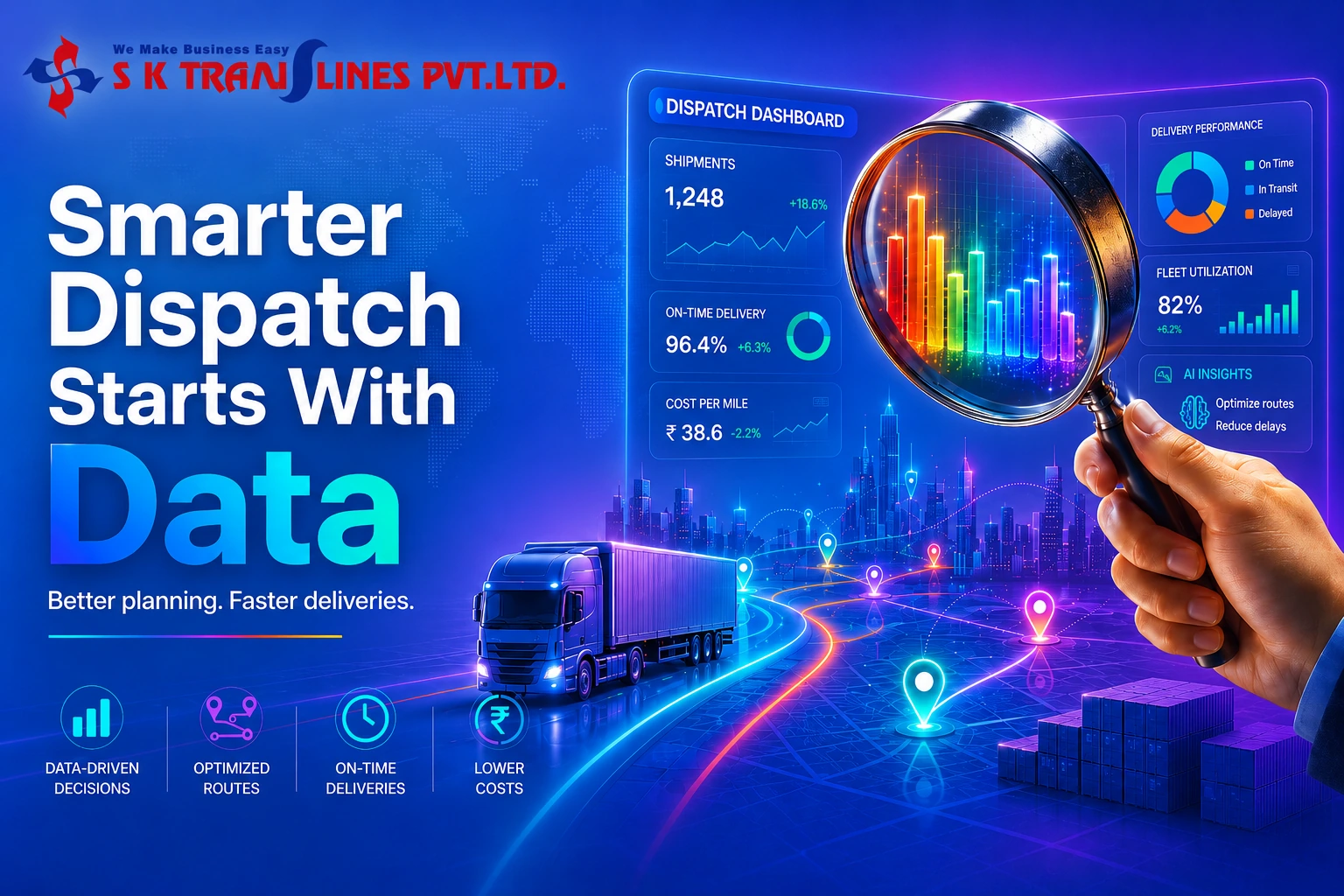
Dispatch planning is one of the most important parts of logistics operations. A small delay, wrong vehicle assignment, poor route decision or missed coordination can affect delivery timelines and customer satisfaction.
Many logistics businesses still depend on manual planning, phone calls, spreadsheets and past experience. While experience is valuable, it is not always enough to manage growing dispatch volumes.
Data-driven logistics helps businesses plan dispatches with better accuracy, speed and control.
What Is Data-Driven Logistics?
Data-driven logistics means using real-time data, historical records, vehicle information, route performance, delivery timelines and operational insights to make better logistics decisions.
Instead of depending only on guesswork, teams can use data to plan dispatches more efficiently.
This helps logistics companies improve vehicle utilization, reduce delays, control costs and deliver better service.
1. Better Vehicle Allocation
Dispatch planning becomes stronger when businesses know which vehicle is available, where it is located and whether it is suitable for the load.
Data helps teams match the right vehicle with the right shipment.
For example, dispatch teams can check vehicle capacity, route suitability, driver availability, current location and previous performance before assigning a trip.
This reduces wrong vehicle selection and improves fleet utilization.
2. Improved Route Planning
Route selection directly affects delivery time and fuel cost.
With data-driven logistics, businesses can review route history, traffic patterns, delivery performance, distance, toll cost and road conditions.
This helps dispatch teams choose routes that are faster, safer and more cost-effective.
Better route planning reduces delays and improves delivery reliability.
3. Reduced Dispatch Delays
Manual dispatch planning often creates delays because teams have to collect information from different sources.
Data-driven systems bring important information into one place.
Vehicle status, driver details, order information, loading updates and delivery requirements can be checked quickly.
This helps teams make faster dispatch decisions and reduce waiting time.
4. Better Load Planning
Load planning is not only about filling a vehicle.
It is about using vehicle capacity properly while keeping safety, route and delivery requirements in mind.
Data helps dispatch teams understand shipment size, weight, volume, destination and priority.
This improves loading decisions and reduces underutilized trips.
Better load planning also helps reduce unnecessary vehicle movement.
5. Real-Time Visibility
Dispatch teams need visibility to manage operations smoothly.
Real-time data helps teams track vehicle movement, loading status, trip progress and delivery updates.
When a delay happens, teams can respond quickly.
They can inform customers, adjust schedules and plan the next dispatch more effectively.
This improves communication and reduces confusion.
6. Better Driver Planning
Driver availability and performance play an important role in dispatch planning.
Data can help businesses understand driver schedules, route experience, trip history and working hours.
This helps managers assign the right driver for the right route.
It also reduces last-minute confusion and improves operational discipline.
7. Lower Operational Costs
Poor dispatch planning can increase fuel expenses, idle time, empty trips and vehicle wear.
Data-driven planning helps reduce these costs by improving route decisions, vehicle usage and trip scheduling.
When vehicles are used more efficiently, logistics businesses can complete more work with better cost control.
This supports stronger profitability.
8. More Accurate Delivery Commitments
Customers expect clear delivery timelines.
Without proper data, businesses may give unrealistic delivery commitments.
Data helps logistics teams estimate delivery time based on route history, vehicle availability, loading time and previous delays.
This allows businesses to give more accurate timelines to customers.
Accurate commitments build trust and improve customer experience.
9. Faster Problem Solving
Logistics operations can face many unexpected issues such as traffic delays, vehicle breakdowns, loading delays or route changes.
Data helps teams identify problems early.
When dispatch teams have access to live updates and past patterns, they can take faster corrective action.
This reduces the impact of operational disruptions.
10. Better Decision-Making for Growth
As logistics operations grow, dispatch planning becomes more complex.
More orders, more vehicles, more locations and more customers require better control.
Data-driven logistics gives management a clear view of dispatch performance.
Businesses can identify weak routes, delayed branches, underused vehicles and recurring planning issues.
These insights help improve future dispatch strategies.
Conclusion
Data-driven logistics improves dispatch planning by helping businesses make smarter, faster and more accurate decisions.
It supports better vehicle allocation, route planning, load management, driver scheduling, real-time tracking and cost control.
For logistics companies that want to reduce delays and improve service quality, data is no longer optional.
It is a key part of building efficient and reliable dispatch operations.