


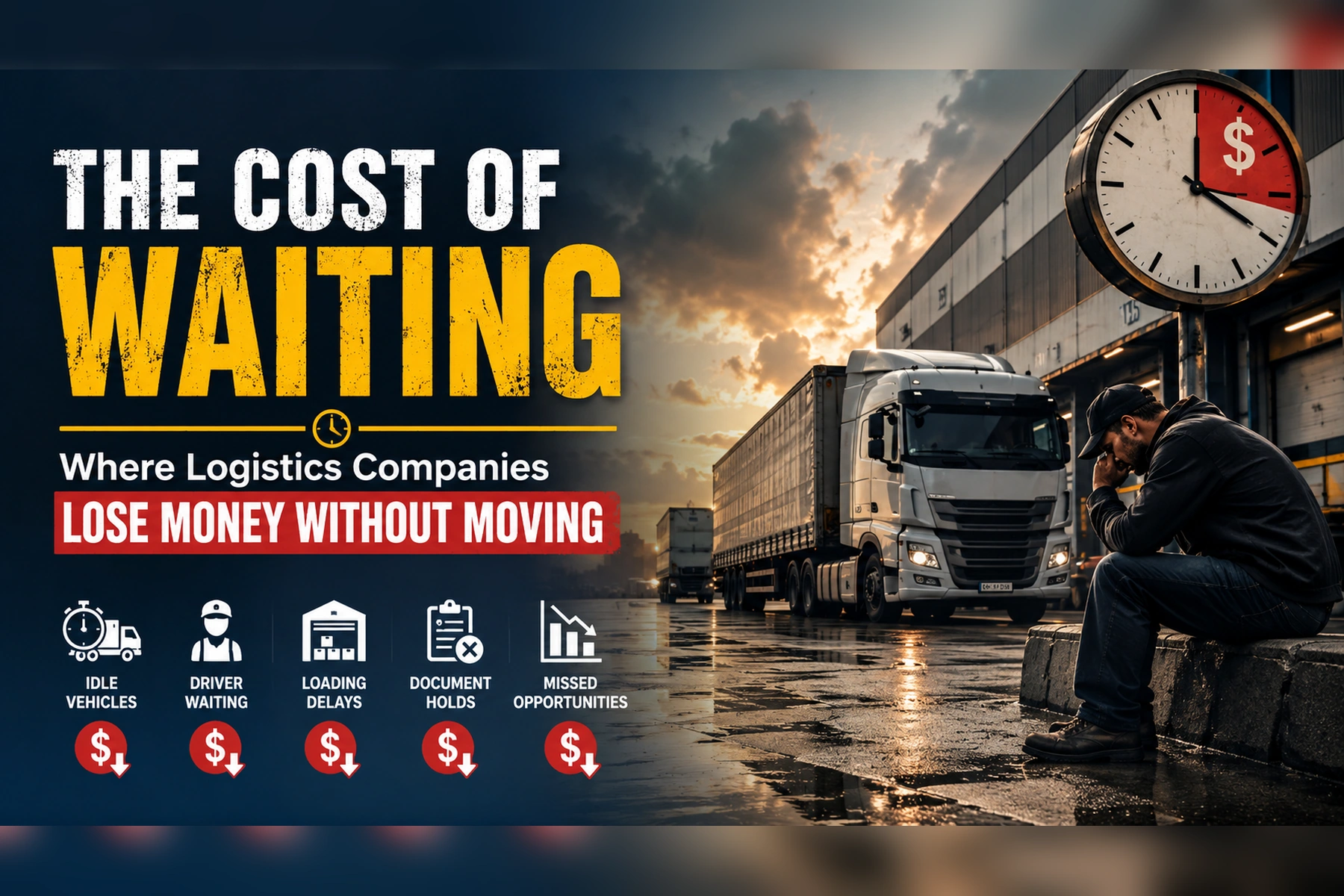
In logistics, movement creates value. A truck on the road, goods being loaded, or a shipment moving through a warehouse all contribute to completing a delivery.
But what happens when nothing moves?
A truck waits outside a warehouse. A driver sits at a loading point. Goods remain at a terminal. Documents are not approved. A vehicle is ready, but the next process is not.
The company may appear to be doing nothing, but costs are still increasing.
That is the hidden cost of waiting.
Waiting Time Is Still Operating Time
A vehicle does not stop costing money simply because it is parked.
During delays, businesses may still be paying for:
- Driver wages
- Vehicle financing or rental
- Fuel used during idling
- Parking or terminal charges
- Detention fees
- Labour
- Administrative time
- Missed delivery opportunities
A two-hour delay may look small on one trip. Repeated across dozens of vehicles every day, it becomes a serious operational expense.
Loading and Unloading Delays
One of the most common causes of logistics waiting time is inefficient loading and unloading.
A truck may reach a warehouse on schedule but still wait because the dock is occupied, labour is unavailable, documents are incomplete, or goods are not ready.
This reduces vehicle utilisation.
Instead of completing another delivery, the truck spends valuable hours standing still.
Better dock scheduling, shipment preparation, and communication between warehouses and transport teams can significantly reduce this idle time.
Driver Waiting Costs
Drivers are often one of the first people affected by operational delays.
They may wait at:
- Factory gates
- Warehouses
- Checkpoints
- Customer locations
- Rail terminals
- Loading yards
Long waiting periods reduce productive driving hours and can affect the next scheduled trip.
In some cases, logistics companies may also need to pay additional allowances, overtime, or detention charges.
Reducing driver waiting time can therefore improve both cost efficiency and workforce productivity.
Documentation Can Stop an Entire Shipment
Not every delay happens on the road.
Sometimes the vehicle, driver, and goods are ready, but the shipment cannot move because paperwork is incomplete.
Missing invoices, incorrect delivery documents, pending approvals, e-way bill issues, or manual verification can hold up an entire operation.
Digital documentation and automated approval workflows can help prevent these unnecessary delays.
A five-minute document process should not become a two-hour vehicle delay.
Warehouse Congestion Creates a Chain Reaction
When too many vehicles arrive at the same time, warehouse congestion can quickly develop.
One delayed truck may block another loading bay. That truck then misses its next slot. Another vehicle arrives before the first one leaves.
Soon, a small delay becomes a larger operational problem.
This is why appointment scheduling and real-time communication between dispatch teams and warehouses are important.
Better coordination keeps vehicles moving instead of creating queues.
Idle Vehicles Lose Revenue Opportunities
Waiting creates another cost that is often overlooked: lost opportunity.
A vehicle that spends three unnecessary hours waiting cannot use those hours for another trip.
This means the company loses potential revenue even if no direct penalty is charged.
For large fleets, improving vehicle turnaround time can sometimes increase capacity without purchasing additional trucks.
The same fleet simply becomes more productive.
Small Delays Become Large Costs at Scale
Consider a fleet of 50 vehicles.
If every vehicle loses just one unnecessary hour each day, that equals 50 hours of lost operational time daily.
Across a month, the total becomes significant.
That is why logistics companies should measure waiting time just as carefully as they measure fuel, kilometres, or freight revenue.
What gets measured can be improved.
Track Where Vehicles Stop
Modern logistics systems can help businesses identify where delays occur most frequently.
Useful metrics include:
- Loading waiting time
- Unloading waiting time
- Vehicle turnaround time
- Driver idle hours
- Detention charges
- Warehouse queue time
- Document approval time
- Delay by customer or location
Once these patterns become visible, companies can focus on the locations or processes creating the greatest losses.
Movement Matters, but So Does the Time Between Movements
Logistics efficiency is not only about driving faster or finding shorter routes.
It is also about reducing the time when vehicles, drivers, goods, and teams are waiting for something else to happen.
Every unnecessary hour of waiting consumes resources without completing another delivery.
The most efficient logistics companies therefore ask two questions:
Where are our vehicles moving?
And just as importantly:
Where are they waiting?
Because sometimes the biggest logistics costs are created when nothing is moving at all.