


Introduction
Inventory management plays a crucial role in keeping supply chains efficient, cost-effective, and reliable. For businesses in India, maintaining the right inventory levels can be challenging due to changing customer demand, transportation delays, seasonal fluctuations, and supplier availability.
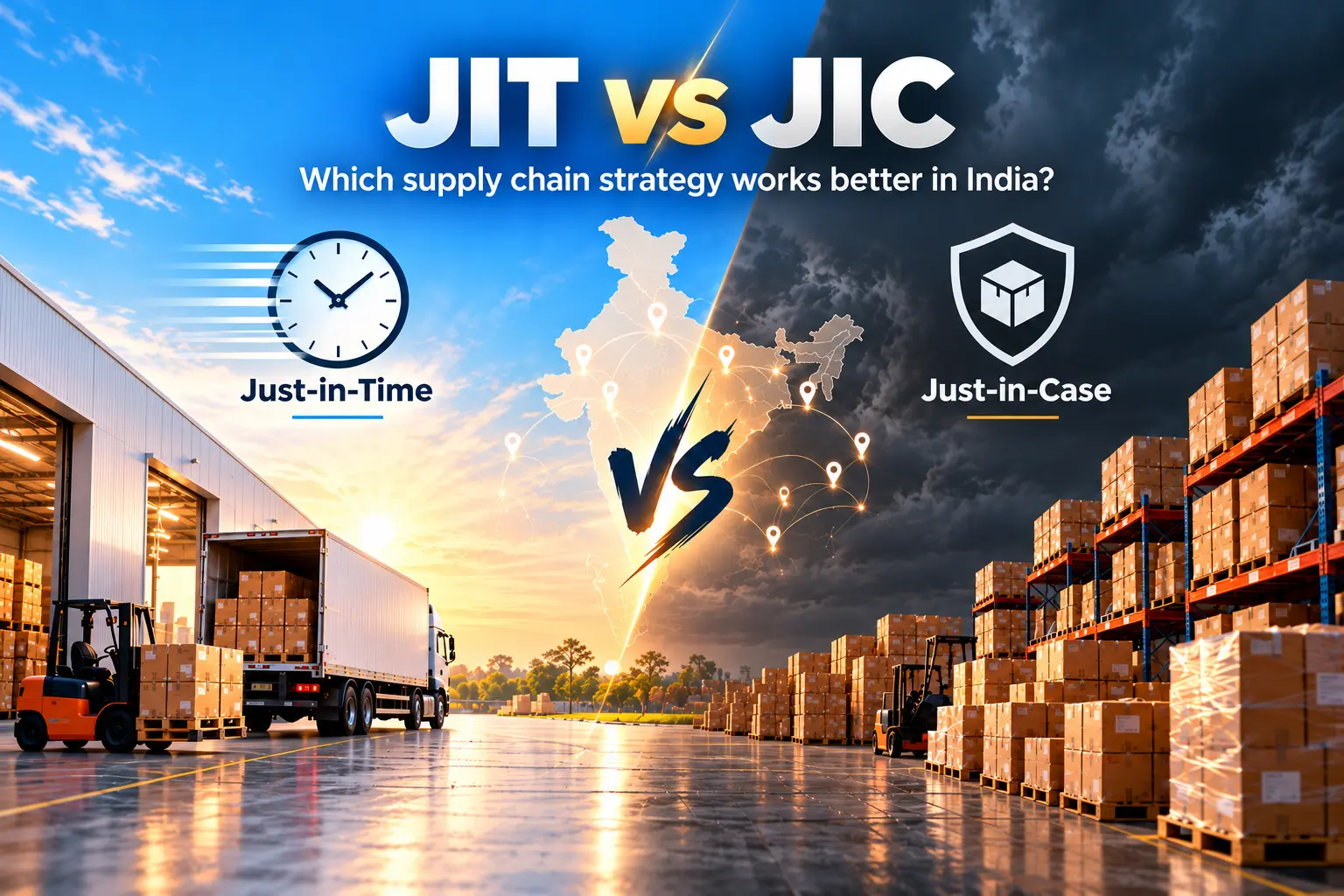
Two popular inventory management strategies are Just-in-Time (JIT) and Just-in-Case (JIC). While JIT focuses on keeping inventory levels low, JIC prioritises maintaining additional stock to prepare for unexpected disruptions.
But which strategy works better for Indian businesses? The answer depends on the industry, supply chain reliability, product demand, and business requirements.
What Is Just-in-Time (JIT) Inventory?
Just-in-Time inventory is a strategy in which businesses receive goods and materials only when they are needed for production or fulfilling customer orders. The objective is to minimise excess stock, reduce storage expenses, and improve operational efficiency.
Benefits of JIT Inventory
- Lower storage costs: Businesses require less warehouse space for excess inventory.
- Reduced wastage: Lower stock levels can minimise product damage, spoilage, and obsolescence.
- Better cash flow: Less money remains tied up in unsold inventory.
- Improved efficiency: Businesses can focus on demand-driven purchasing and production.
Challenges of JIT in India
JIT depends heavily on reliable suppliers and timely transportation. Traffic congestion, monsoon-related disruptions, long-distance deliveries, and inconsistent supplier schedules can create challenges.
For example, a manufacturing unit that depends on daily raw material deliveries may experience production delays if a shipment is held up unexpectedly.
What Is Just-in-Case (JIC) Inventory?
Just-in-Case inventory involves keeping additional stock of essential materials or finished products to prepare for unexpected demand increases and supply chain disruptions.
Instead of relying entirely on frequent deliveries, businesses maintain safety stock to reduce the risk of shortages.
Benefits of JIC Inventory
- Greater supply chain resilience: Extra stock helps businesses manage temporary supplier or transportation disruptions.
- Fewer stockouts: Products remain available when demand rises unexpectedly.
- Production continuity: Manufacturers can continue operations even when replenishment is delayed.
- Better seasonal preparedness: Businesses can prepare for festivals, peak shopping periods, and seasonal demand.
Challenges of JIC in India
Maintaining additional inventory increases warehousing, handling, insurance, and working capital costs. Businesses dealing with perishable goods, fast-changing products, or limited storage space may also face wastage and obsolescence.
For small and medium-sized enterprises (SMEs), excessive stock can tie up funds that could otherwise support business growth.
JIT vs. JIC: Key Differences
| Factor | Just-in-Time (JIT) | Just-in-Case (JIC) |
| Inventory levels | Low | Higher safety stock |
| Storage costs | Generally lower | Generally higher |
| Risk of stockouts | Higher if replenishment fails | Lower when safety stock is sufficient |
| Cash flow | Less capital tied up in inventory | More capital tied up in inventory |
| Supplier dependency | High | Relatively lower |
| Best suited for | Reliable, predictable supply chains | Uncertain demand or disruption-prone supply chains |
Which Strategy Works Better in India?
India’s diverse business environment makes it difficult to apply one inventory strategy across every industry. The choice depends on how quickly products can be replenished and how costly a stockout would be.
1. Manufacturing and Automotive Industries
Manufacturers using components that arrive frequently may benefit from JIT when suppliers, transport schedules, and production systems are dependable. However, critical components with long lead times may require additional safety stock.
2. E-Commerce and Retail
Retailers can use JIT for products with predictable demand and reliable replenishment. However, keeping buffer stock for popular products during festive seasons and major sales events can help avoid missed orders.
3. Food and Perishable Goods
Businesses handling fresh produce and other perishable products need to balance availability with shelf life. Frequent replenishment can reduce spoilage, while carefully planned reserves of suitable non-perishable essentials can provide additional protection.
4. Pharmaceuticals and Essential Supplies
Stockouts can have serious consequences when essential medicines and healthcare supplies are involved. Appropriate safety stock, demand forecasting, and reliable storage conditions are important, alongside regulatory and expiry-date management.
Why Transportation and Warehousing Matter
Both JIT and JIC depend on effective logistics management. JIT requires dependable transportation and timely deliveries, while JIC needs sufficient warehouse capacity and efficient inventory movement.
Businesses can improve either strategy by using shipment tracking, accurate demand forecasts, warehouse management systems, and reliable logistics partners.
Better visibility into shipment locations and expected delivery times helps businesses decide when to replenish stock, where to maintain safety inventory, and how to respond to potential disruptions.
The Smarter Approach: A Hybrid Inventory Strategy
For many Indian businesses, combining JIT and JIC can provide a practical balance between cost efficiency and supply chain resilience.
A hybrid approach may involve:
- Using JIT for regularly available materials with predictable demand.
- Maintaining safety stock for critical components and high-demand products.
- Increasing inventory ahead of known seasonal peaks.
- Reviewing supplier lead times and transportation risks regularly.
- Using data analytics to identify the right inventory levels for different products.
This approach allows businesses to control unnecessary inventory costs without relying entirely on uninterrupted supply.
Conclusion
Just-in-Time and Just-in-Case inventory strategies serve different business needs. JIT supports lean operations and lower holding costs, while JIC provides an additional buffer against supply disruptions and unexpected demand.
In India, the most suitable approach depends on supplier reliability, transportation infrastructure, product characteristics, and the cost of running out of stock. For many businesses, a hybrid strategy that combines efficient replenishment with carefully planned safety stock can help balance cost, flexibility, and reliability.
Looking for dependable transportation and logistics support for your supply chain? Visit SK Translines to explore logistics solutions that support efficient freight movement and business operations.