


Rail freight is one of the most efficient ways to transport bulk cargo over long distances. However, delays during loading, unloading or cargo removal can result in additional charges that significantly increase the total transportation cost.
Two charges that rail shippers frequently encounter are demurrage and wharfage. Although these terms are sometimes used interchangeably, they apply to different situations.
Understanding the difference can help businesses improve cargo planning, avoid unnecessary expenses and maintain smoother railway operations.
What Is Demurrage?
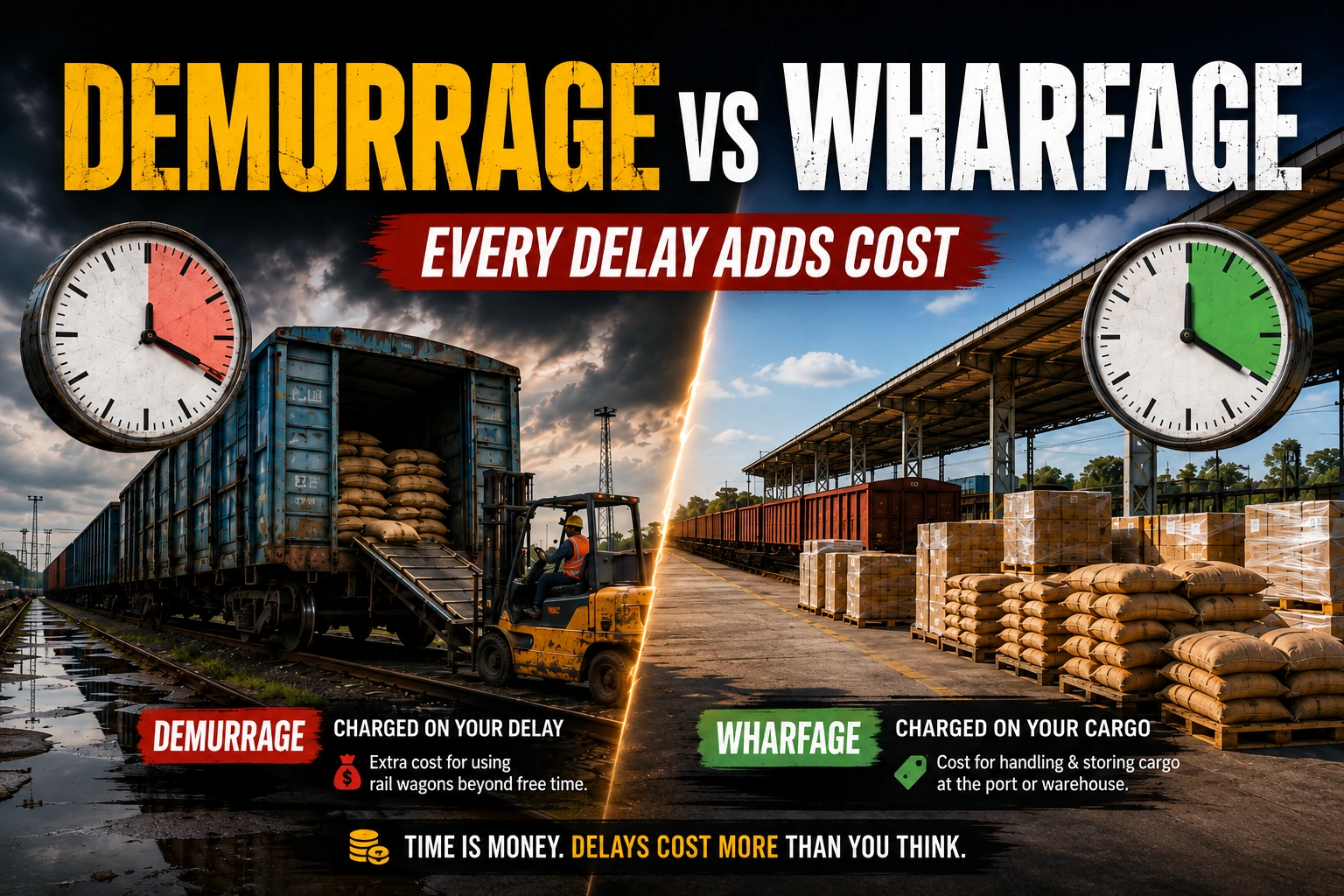
Demurrage is a charge imposed when railway wagons or other rolling stock are kept occupied beyond the permitted free time.
Indian Railways defines demurrage as a charge for the detention of rolling stock after the expiry of the free time allowed for loading or unloading.
For example, suppose a rake reaches a goods shed and the consignee is given a specific period to unload the cargo. If unloading is not completed within that permitted time, demurrage charges may begin accumulating.
The purpose of demurrage is to prevent unnecessary detention of wagons. A wagon that remains occupied cannot be used for another shipment, reducing the overall availability and efficiency of railway assets.
Common Reasons for Demurrage
Demurrage may occur because of:
- Delayed arrival of labour or unloading equipment
- Insufficient trucks for removing goods from the terminal
- Poor coordination between the railway, consignee and transporter
- Equipment breakdown during loading or unloading
- Documentation or payment delays
- Inadequate storage arrangements
- Slow handling of bulk, heavy or specialised cargo
Simply put, demurrage is mainly connected with how long the railway wagon remains detained.
What Is Wharfage?
Wharfage is a charge imposed when cargo is not removed from railway premises within the permitted free time.
Indian Railways states that wharfage applies to goods or consignments remaining at places such as railway stations, platforms, goods sheds, godowns, sidings or other railway wharves after the free removal period has expired. It generally does not apply when the goods are still inside a railway wagon or are detained at a private siding.
For example, a consignee may unload the cargo within the permitted time and release the railway wagon. However, if the unloaded goods continue occupying space at the goods shed beyond the allowed removal period, wharfage may be charged.
Wharfage encourages customers to clear their consignments quickly so that railway premises remain available for handling other cargo.
Common Reasons for Wharfage
Wharfage may arise because of:
- Shortage of trucks for final delivery
- Lack of warehouse space
- Delayed collection by the consignee
- Documentation or delivery-order issues
- Disputes regarding quantity, quality or ownership
- Poor communication about the cargo’s arrival
- Local transport restrictions or vehicle availability problems
Wharfage is therefore mainly connected with how long the goods occupy railway premises.
Demurrage vs Wharfage: The Main Difference
The easiest way to understand the distinction is:
Demurrage is charged for delaying the wagon. Wharfage is charged for delaying the removal of goods.
A shipment can sometimes attract both charges at different stages.
For instance, demurrage may apply when unloading is not completed within the free time. Once the wagon is unloaded and released, wharfage may apply if the cargo continues to remain at the railway terminal.
What Is Free Time?
Free time is the period provided by the railway for completing activities such as loading, unloading, stacking or removing cargo without additional detention charges.
The permissible free time can vary according to factors such as:
- Type of wagon
- Type of commodity
- Loading or unloading method
- Nature and classification of the terminal
- Whether the cargo is handled at a goods shed or siding
- Operational conditions and applicable Railway Board instructions
Indian Railways maintains separate guidelines for free time, demurrage, wharfage, stacking and stabling charges across different wagon and terminal categories.
Shippers should therefore avoid assuming that the same free-time period applies to every shipment or railway terminal.
Why These Charges Matter to Shippers
Demurrage and wharfage are not simply administrative penalties. They can directly affect the profitability and reliability of a supply chain.
Repeated delays can result in:
- Higher transportation expenses
- Increased landed cost of goods
- Longer vehicle waiting times
- Congestion at railway terminals
- Delayed deliveries to customers
- Reduced availability of wagons
- Disputes between shippers, consignees and transporters
For businesses transporting cement, steel, fertilisers, foodgrains, coal or other bulk commodities, even a relatively small delay across an entire rake can create a substantial additional expense.
Can Demurrage or Wharfage Be Waived?
Waiver requests may be considered in certain circumstances, but waivers should not be treated as automatic.
The shipper may be required to show that the delay occurred because of circumstances beyond its reasonable control. Applications normally need supporting documents, operational records and a clear explanation of the cause of detention.
Indian Railways revised guidelines concerning the authority and circumstances for waiver or write-off of demurrage and wharfage charges in 2026.
Depending on the situation, supporting evidence may include:
- Railway placement and release records
- Weather reports
- Labour disruption records
- Equipment breakdown reports
- Correspondence with railway officials
- Government restriction notifications
- Terminal closure or operational interruption details
Businesses should submit waiver applications within the applicable timeline and follow the latest rules issued by the concerned railway zone.
How to Prevent Demurrage and Wharfage
Avoiding these charges requires coordination before the rake or consignment arrives.
1. Track the Shipment Closely
Monitor the rake’s expected arrival and inform transporters, labour contractors, warehouse teams and customers in advance.
2. Arrange Labour and Equipment Early
Ensure that cranes, forklifts, loaders, weighment facilities and handling labour are ready before placement of the wagons.
3. Keep Road Vehicles Available
Position enough trucks at the terminal to move the unloaded cargo without creating congestion.
4. Confirm Warehouse Capacity
Check whether the destination warehouse has sufficient space before dispatching the shipment.
5. Prepare Documentation in Advance
Railway receipts, delivery orders, payment confirmations, e-way bills and other supporting documents should be verified before the cargo arrives.
6. Record Operational Timings
Maintain accurate records of wagon placement, loading or unloading commencement, completion, release and cargo removal. These records can be valuable when verifying charges or submitting a waiver request.
7. Create a Contingency Plan
Keep backup labour, transport vehicles, equipment and temporary storage arrangements available for high-volume or time-sensitive shipments.
Final Thoughts
Demurrage and wharfage both arise from delays, but they apply to different parts of railway freight operations.
Demurrage relates to the detention of railway wagons beyond the permitted free time. Wharfage relates to goods remaining on railway premises beyond the allowed removal period.
For rail shippers, the best strategy is prevention. Proper arrival tracking, advance documentation, sufficient labour, vehicle planning and close coordination with railway officials can reduce avoidable delays. Because free-time limits, rates and waiver procedures may be revised through Railway Board and zonal railway instructions, businesses should always verify the latest applicable rules before planning or handling a rail consignment.