


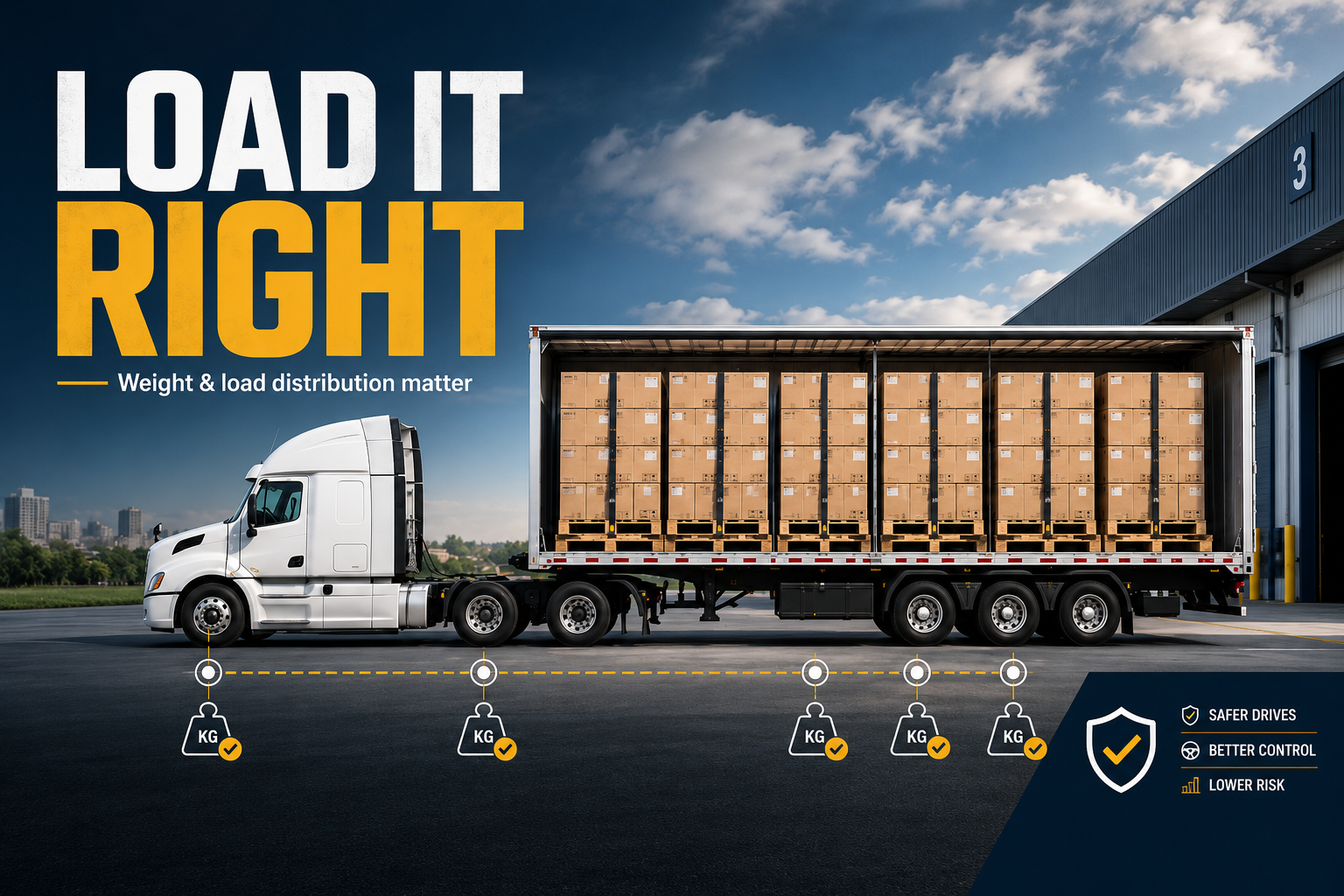
Commercial transportation is not only about moving goods from one location to another. It also involves ensuring that every shipment is loaded safely, legally and efficiently. Accurate cargo weight and proper load distribution play an important role in protecting vehicles, drivers, goods and other road users.
Even a small mistake in weight calculation or cargo placement can lead to higher fuel costs, vehicle damage, regulatory penalties and serious safety risks.
Improves Vehicle Stability and Safety
When cargo is distributed unevenly, the vehicle’s balance can be affected. Too much weight on one side, at the rear or on a particular axle can make the truck difficult to steer and control.
Improper loading may increase the chances of:
- Vehicle rollovers
- Loss of steering control
- Longer braking distances
- Tyre failure
- Cargo shifting during transit
Balanced loading helps the vehicle remain stable while turning, braking or travelling on uneven roads.
Prevents Axle Overloading
A truck may be within its total legal weight limit but still have excessive weight on one axle. This is known as axle overloading.
Axle overloading puts unnecessary pressure on tyres, suspension systems, brakes and road surfaces. It may also result in fines, vehicle detention or unloading requirements at inspection points.
Accurate weighing and proper cargo placement help distribute the load evenly across all axles.
Reduces Fuel Consumption
Overloaded or poorly balanced vehicles require more engine power to move. This increases fuel consumption and reduces overall transportation efficiency.
A properly distributed load helps the vehicle maintain better balance and reduces unnecessary strain on the engine. Over time, this can lead to significant fuel savings, especially for companies operating large commercial fleets.
Protects Vehicles From Damage
Excessive or uneven weight can accelerate wear and tear on important vehicle components, including:
- Tyres
- Brakes
- Suspension
- Wheel bearings
- Chassis
- Transmission
Frequent overloading may also increase maintenance costs and reduce the vehicle’s operational life.
Proper load planning allows businesses to protect their vehicles and reduce unexpected breakdowns.
Prevents Cargo Damage
Cargo that is not positioned or secured correctly can move during transportation. Sudden braking, sharp turns or rough roads may cause goods to collide, fall or become damaged.
Load distribution is especially important when transporting fragile goods, machinery, liquids, construction materials or products of different sizes and weights.
Placing heavier cargo at the correct position and securing all items properly helps protect the shipment throughout the journey.
Supports Legal Compliance
Commercial vehicles must follow specific weight and axle-load regulations. These limits are designed to improve road safety and reduce damage to transport infrastructure.
Businesses that fail to comply may face penalties, shipment delays, vehicle detention or legal action.
Accurate weighing before dispatch allows transporters to identify overloading problems and make the necessary adjustments before the vehicle enters the road.
Improves Delivery Reliability
Vehicle breakdowns, inspections and load-related accidents can cause major delivery delays. These disruptions may affect customers, increase operational costs and damage the company’s reputation.
Proper load management reduces the chances of unexpected problems during transportation. It helps businesses maintain reliable schedules and deliver goods safely and on time.
Helps Drivers Operate More Confidently
Drivers depend on the vehicle’s balance and responsiveness to operate safely. An unevenly loaded truck may behave differently while accelerating, braking or turning.
When the cargo is correctly distributed, drivers experience better steering control, improved braking and greater confidence on the road.
Best Practices for Safe Load Distribution
Transport companies should follow a structured loading process before every journey.
Some important practices include:
- Confirming the total cargo weight
- Checking individual axle loads
- Placing heavier goods low and near the centre
- Distributing weight evenly on both sides
- Using suitable straps, locks and restraints
- Inspecting the load before dispatch
- Rechecking cargo during long-distance journeys
Conclusion
Accurate weight measurement and proper load distribution are essential parts of commercial transportation. They improve vehicle safety, protect goods, reduce fuel and maintenance expenses and help businesses comply with transport regulations.
A well-planned load does more than prevent overloading. It supports safer journeys, reliable deliveries and better overall fleet performance. For transport businesses, proper weight management is not only a legal requirement but also a smart operational practice.