


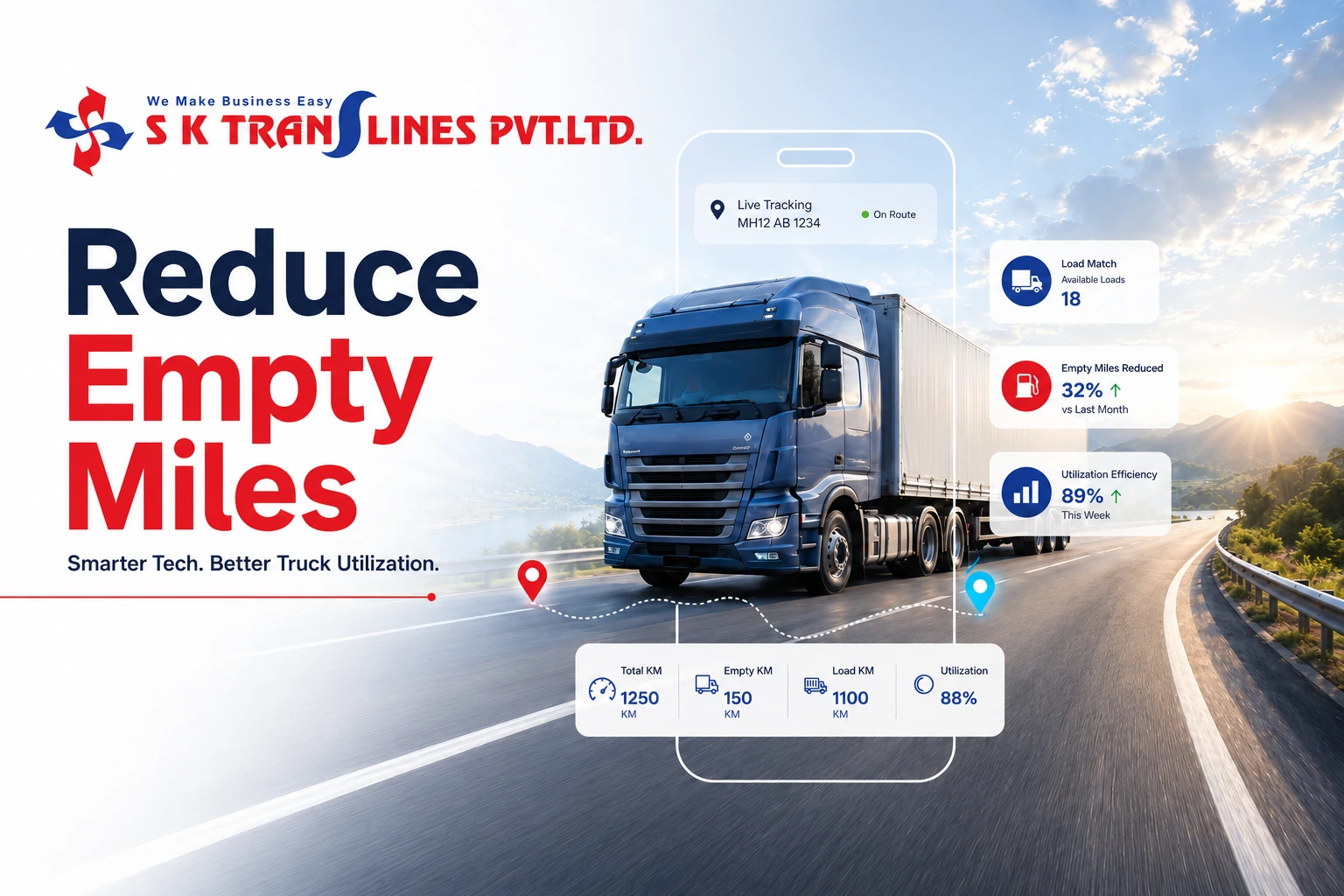
Empty truck movement is one of the biggest hidden challenges in the logistics industry. When a truck travels without cargo after completing a delivery or while moving toward the next pickup point it increases fuel costs reduces vehicle productivity and adds unnecessary pressure on drivers and operations teams.
For logistics companies reducing empty truck movement is not only about saving money. It is also about improving delivery efficiency using resources better and building a more sustainable transport system. Technology now plays a major role in solving this problem.
What Is Empty Truck Movement?
Empty truck movement happens when a vehicle runs without carrying goods. This usually happens after unloading cargo when there is no return load available from the delivery location. It can also happen when trucks are sent to another city or branch without proper load planning.
Every empty trip means fuel is being consumed without revenue. It also increases vehicle wear and tear driver hours and overall operating cost.
Why Empty Truck Movement Is a Serious Problem
In logistics every kilometre matters. When a truck moves empty the company loses an opportunity to earn from that vehicle. It also affects delivery planning because vehicles are not used at full capacity.
Empty movement can lead to:
Higher fuel consumption
Increased transport cost
More carbon emissions
Lower fleet productivity
Higher maintenance cost
Poor route utilization
For businesses that depend on timely freight movement these challenges can directly affect profitability and service quality.
How Technology Helps Reduce Empty Truck Movement
Technology gives logistics companies better visibility control and planning power. Instead of depending only on manual calls and assumptions companies can use data and digital systems to make smarter decisions.
1. Real Time Vehicle Tracking
GPS tracking helps logistics teams know the exact location of every truck. When a truck is about to complete a delivery the team can already search for the next available load near that location.
This reduces waiting time and avoids unnecessary empty travel. Real time tracking also helps companies assign the nearest available truck to a new shipment instead of sending another vehicle from far away.
2. Smart Load Matching
Digital load matching systems connect available trucks with available cargo. This helps logistics companies find return loads faster.
For example if a truck delivers goods in Kolkata the system can help identify cargo that needs to move from Kolkata or nearby areas to another destination. This makes the return journey productive instead of empty.
3. Route Optimization
Route optimization software helps plan the best routes based on distance traffic delivery points fuel usage and vehicle availability.
With better route planning logistics companies can combine multiple shipments reduce unnecessary detours and avoid empty running between pickup and delivery points. This improves both time efficiency and cost control.
4. Fleet Management Systems
A fleet management system gives complete visibility of vehicles drivers trips and schedules. It helps operations teams understand which trucks are loaded which are empty which are available and which are under maintenance.
This makes vehicle allocation easier. Instead of planning manually the team can use accurate data to assign trucks more effectively.
5. Data Analytics for Better Planning
Data helps logistics companies identify patterns. For example certain routes may regularly have empty return trips. Some locations may have frequent cargo demand while others may have low return load availability.
By studying this data companies can improve route planning build better customer networks and reduce repeated empty movements over time.
6. Digital Communication Between Teams
Fast communication between branches drivers and operations teams is very important. Technology helps share trip updates delivery status load availability and vehicle location instantly.
This reduces delays in decision making. When information moves faster trucks can be assigned faster and empty time can be reduced.
7. Better Customer and Shipment Coordination
Technology also helps logistics companies coordinate better with customers. Advance booking digital order management and shipment visibility allow companies to plan vehicle usage before the truck becomes empty.
When upcoming shipments are visible in the system operations teams can align deliveries and pickups more efficiently.
Environmental Benefits of Reducing Empty Truck Movement
Empty truck movement increases fuel usage and carbon emissions. By reducing empty trips logistics companies can support greener transportation.
Better vehicle utilization means fewer unnecessary kilometres on the road. This helps reduce pollution fuel wastage and traffic pressure. For modern logistics companies sustainability is becoming just as important as speed and cost efficiency.
The Future of Empty Truck Reduction
The future of logistics will depend heavily on automation artificial intelligence route intelligence and connected fleet systems. As technology becomes stronger companies will be able to predict load demand plan return trips and reduce idle vehicle movement more effectively.
Logistics companies that adopt these technologies early will be able to offer better service faster deliveries and more cost effective freight solutions.
Conclusion
Empty truck movement is a major challenge but technology is helping logistics companies control it better than ever before. With GPS tracking smart load matching route optimization fleet management and data analytics companies can reduce waste improve vehicle productivity and lower transportation costs.
For the logistics industry technology is no longer optional. It is a powerful tool for building faster smarter and more sustainable freight operations.