


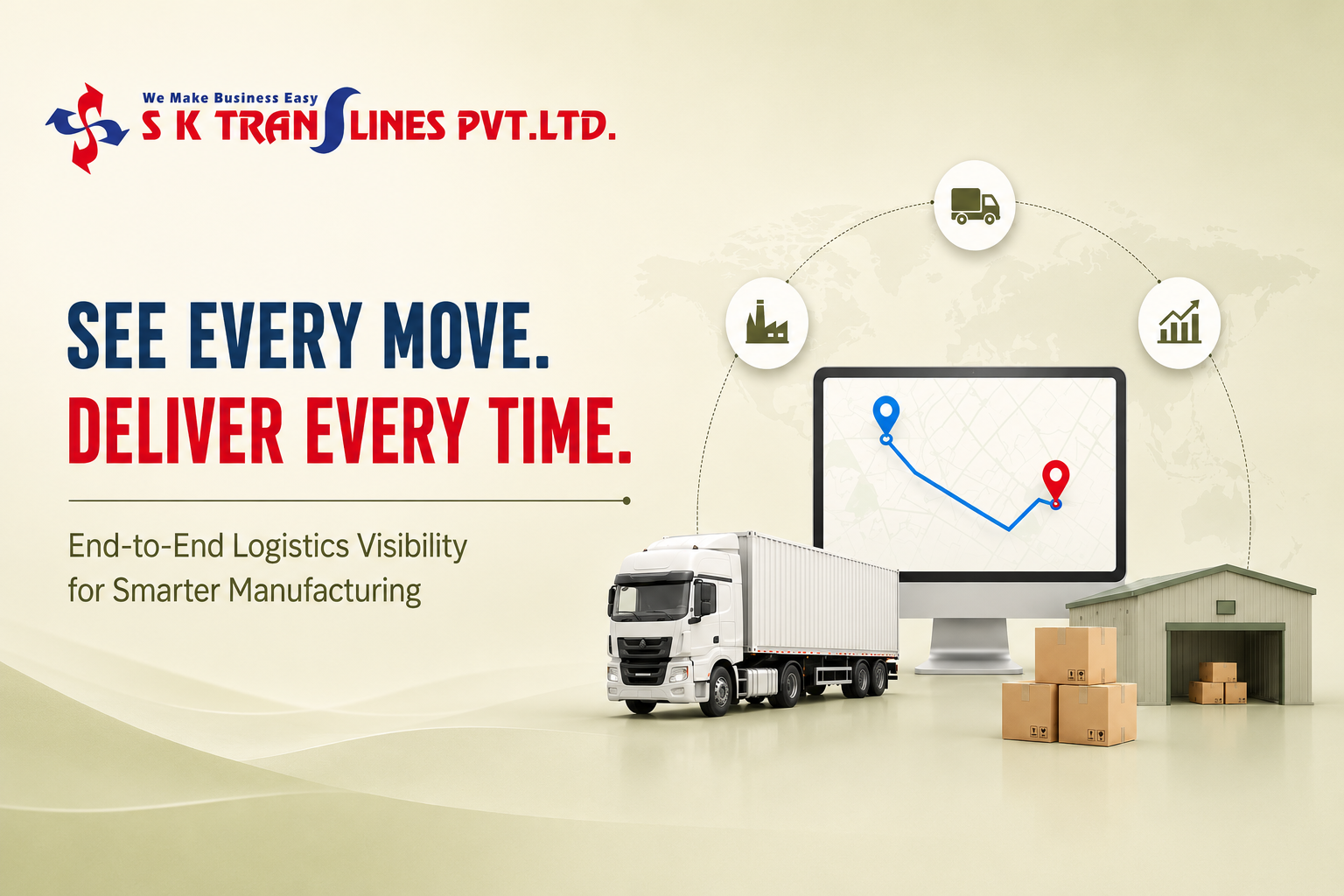
Manufacturing businesses depend on smooth movement of raw materials, finished goods, vehicles, warehouses and delivery partners.
A delay in one part of the supply chain can affect production schedules, dispatch planning, customer commitments and overall business performance.
This is why manufacturers need end-to-end logistics visibility.
End-to-end logistics visibility helps manufacturers track goods from supplier to factory to warehouse to customer. It gives teams better control over movement, delays, costs and delivery timelines.
What Is End-to-End Logistics Visibility?
End-to-end logistics visibility means having a clear view of every stage of logistics operations.
It includes raw material movement, inbound transport, factory dispatches, warehouse transfers, vehicle tracking, delivery status, proof of delivery and customer updates.
Instead of depending only on phone calls, manual updates and scattered reports, manufacturers can use digital systems to track logistics activity in real time.
This helps businesses make faster and better decisions.
1. It Helps Avoid Production Delays
Manufacturers need raw materials to arrive on time.
If materials are delayed and the production team does not know early, the entire production schedule can be affected.
End-to-end visibility helps teams track inbound shipments and identify delays before they become serious.
This allows manufacturers to adjust production plans, inform teams and reduce downtime.
2. It Improves Dispatch Planning
Finished goods need proper dispatch planning.
Without visibility, dispatch teams may not know which orders are ready, which vehicles are available, which route is better and which delivery needs priority.
Logistics visibility gives dispatch teams real-time information about shipment status, vehicle location and delivery requirements.
This helps them plan dispatches more accurately and reduce last-minute confusion.
3. It Reduces Communication Gaps
Manufacturing logistics often involves many teams.
Purchase teams, production teams, warehouse teams, dispatch teams, transporters and customers all need timely information.
When updates are manual, communication gaps become common.
End-to-end visibility keeps everyone informed through one connected system.
This reduces repeated calls, missed updates and confusion between departments.
4. It Builds Better Customer Trust
Customers expect accurate delivery timelines.
If a manufacturer cannot provide clear shipment updates, customers may lose confidence.
With logistics visibility, businesses can share better delivery estimates and real-time updates.
This improves customer experience and builds stronger trust.
5. It Helps Control Logistics Costs
Poor visibility can increase costs.
Delays, idle vehicles, wrong routes, repeated follow-ups, loading delays and unplanned detention can affect profitability.
End-to-end visibility helps manufacturers identify where costs are increasing.
They can track route performance, vehicle usage, waiting time and delivery delays.
This helps reduce unnecessary expenses and improve cost control.
6. It Improves Inventory Planning
Inventory planning becomes difficult when shipment movement is unclear.
If inbound materials are delayed, stock planning gets affected. If finished goods are not dispatched on time, warehouse space can become blocked.
Logistics visibility helps manufacturers understand what is moving, what is delayed and what is expected to arrive.
This supports better inventory planning and smoother warehouse operations.
7. It Reduces Risk in the Supply Chain
Manufacturing supply chains can face many risks.
Vehicle breakdowns, route delays, weather issues, loading problems and documentation errors can disturb operations.
With end-to-end visibility, businesses can identify risks early and respond faster.
This helps reduce the impact of unexpected disruptions.
8. It Improves Transporter Performance Tracking
Manufacturers often work with multiple transporters.
Without proper tracking, it becomes difficult to compare transporter performance.
Visibility systems help monitor delivery timelines, route delays, vehicle availability and service quality.
This helps manufacturers choose better logistics partners and improve transporter accountability.
9. It Supports Better Decision-Making
Logistics data helps manufacturers understand how their supply chain is performing.
They can study delivery delays, route efficiency, vehicle utilization, warehouse movement and cost patterns.
These insights help management make better decisions.
Instead of guessing, manufacturers can improve logistics based on real data.
10. It Makes the Business More Scalable
As a manufacturing business grows, logistics becomes more complex.
More suppliers, more orders, more warehouses, more customers and more transport partners can make manual tracking difficult.
End-to-end visibility creates a strong system for growth.
It helps businesses manage larger logistics operations without losing control.
Conclusion
Manufacturers need end-to-end logistics visibility because logistics directly affects production, dispatch, inventory, customer satisfaction and cost control.
With better visibility, businesses can track goods, reduce delays, improve planning and respond faster to problems.
For modern manufacturers, logistics visibility is not just a tracking feature.
It is a key requirement for building a reliable, efficient and scalable supply chain.