


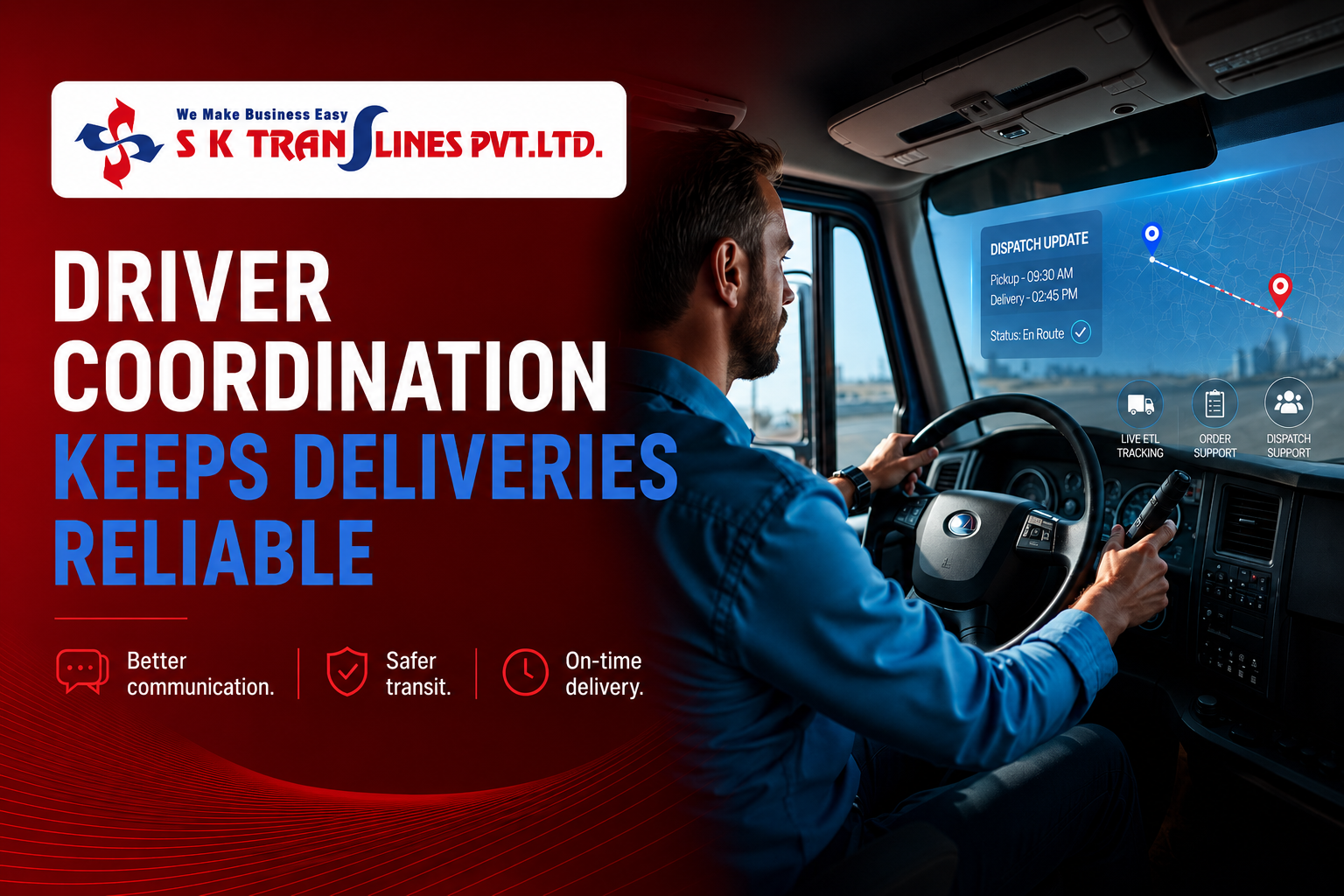
Reliable goods transportation depends on more than vehicles routes and technology. At the center of every successful delivery is strong driver coordination. Drivers are the people who move goods from one point to another. They handle real road conditions time pressure customer expectations and unexpected challenges.
When driver coordination is weak deliveries become slow confusing and unreliable. When it is strong transportation becomes smoother safer and more dependable.
What Is Driver Coordination in Goods Transportation
Driver coordination means managing communication planning tracking and support between transport teams and drivers. It includes assigning trips sharing route details updating delivery status handling delays and solving problems during transit.
In logistics every minute matters. A small communication gap can lead to late delivery wrong unloading points missed documents extra fuel cost or customer dissatisfaction. This is why driver coordination plays a major role in building a reliable transportation system.
1. It Helps Maintain On Time Deliveries
Timely delivery is one of the biggest expectations in goods transportation. Customers want their materials to reach the destination as promised. Businesses also depend on delivery schedules to manage production sales inventory and dispatch planning.
Proper driver coordination helps transport teams know where the vehicle is and whether the trip is moving as planned. If there is traffic breakdown route diversion or loading delay the team can take quick action.
This reduces uncertainty and helps maintain delivery commitments.
2. It Improves Route Planning
Drivers understand road conditions better than anyone. They know which routes are crowded which roads are under repair and which areas may cause delays.
When drivers and operations teams coordinate properly route planning becomes more practical. The team can guide drivers with better routes while drivers can share real time road updates from the ground.
This helps reduce travel time fuel usage and unnecessary stoppages.
3. It Reduces Delivery Errors
Wrong delivery location incorrect documents missing unloading instructions and confusion about consignee details can create serious problems. These errors waste time and damage customer trust.
Driver coordination ensures that every driver receives clear instructions before the trip starts. Details such as pickup point delivery address contact person invoice papers LR details and unloading requirements must be shared properly.
Clear coordination reduces mistakes and helps goods reach the right destination without confusion.
4. It Strengthens Safety During Transit
Transportation involves many risks. Long routes night driving bad weather heavy loads and road emergencies can affect driver safety and goods safety.
Regular coordination helps the transport team stay connected with drivers throughout the journey. Drivers can report issues such as vehicle trouble road blockage accident risk or unsafe stoppage points.
This allows the team to guide them quickly and arrange support when needed. A connected driver is always safer than a driver moving without support.
5. It Helps Handle Delays Better
Delays are common in logistics. Traffic congestion loading delays toll issues vehicle breakdowns and weather problems can affect delivery timelines.
The problem is not only the delay. The bigger problem is not knowing about the delay in time.
Strong driver coordination gives early visibility into problems. When the team gets timely updates they can inform the customer revise schedules arrange backup support and reduce the impact of the delay.
This makes the entire transportation process more professional.
6. It Improves Customer Communication
Customers expect clear updates about their goods. They want to know when the vehicle is dispatched where it has reached and when delivery can be expected.
Without driver coordination customer updates become guesswork. With proper driver coordination the operations team can provide accurate updates.
This builds confidence. It also shows that the transport company is serious about service quality.
7. It Reduces Operational Cost
Poor coordination often increases cost. Drivers may take longer routes wait unnecessarily miss instructions or waste fuel due to confusion.
Good coordination helps reduce these issues. The team can plan better trips avoid idle time improve vehicle usage and reduce repeated calls caused by missing information.
Over time this improves cost control and operational efficiency.
8. It Builds Driver Accountability
Drivers perform better when roles and expectations are clear. Proper coordination helps them understand reporting points delivery timelines document handling and customer communication standards.
This creates accountability without creating pressure. Drivers know what is expected from them and the transport team knows how the trip is progressing.
A coordinated system helps both sides work with clarity.
9. It Supports Better Problem Solving
In goods transportation problems can appear at any stage. A driver may face loading issues at the pickup point. The consignee may not be available at delivery. The vehicle may require repair. The customer may ask for urgent status updates.
Driver coordination helps teams solve such problems faster. Since the driver is directly connected with the operations team decisions can be taken quickly.
Fast problem solving keeps the supply chain moving.
10. It Creates a More Reliable Logistics Network
Reliable transportation is built on discipline communication and visibility. Driver coordination connects all these parts.
It helps the company manage vehicles drivers customers and delivery timelines in a structured way. It also reduces uncertainty in daily operations.
For businesses that depend on regular goods movement driver coordination is not optional. It is a core part of dependable logistics.
Conclusion
Driver coordination is critical because drivers are the link between planning and actual delivery. Even the best logistics plan can fail if the driver is not guided supported and updated properly.
Strong coordination helps ensure timely deliveries safer transit fewer errors better customer updates and lower operational costs. It also builds trust between the transport company drivers and customers.
In reliable goods transportation driver coordination is not just a support activity. It is one of the most important factors behind smooth and successful delivery.