


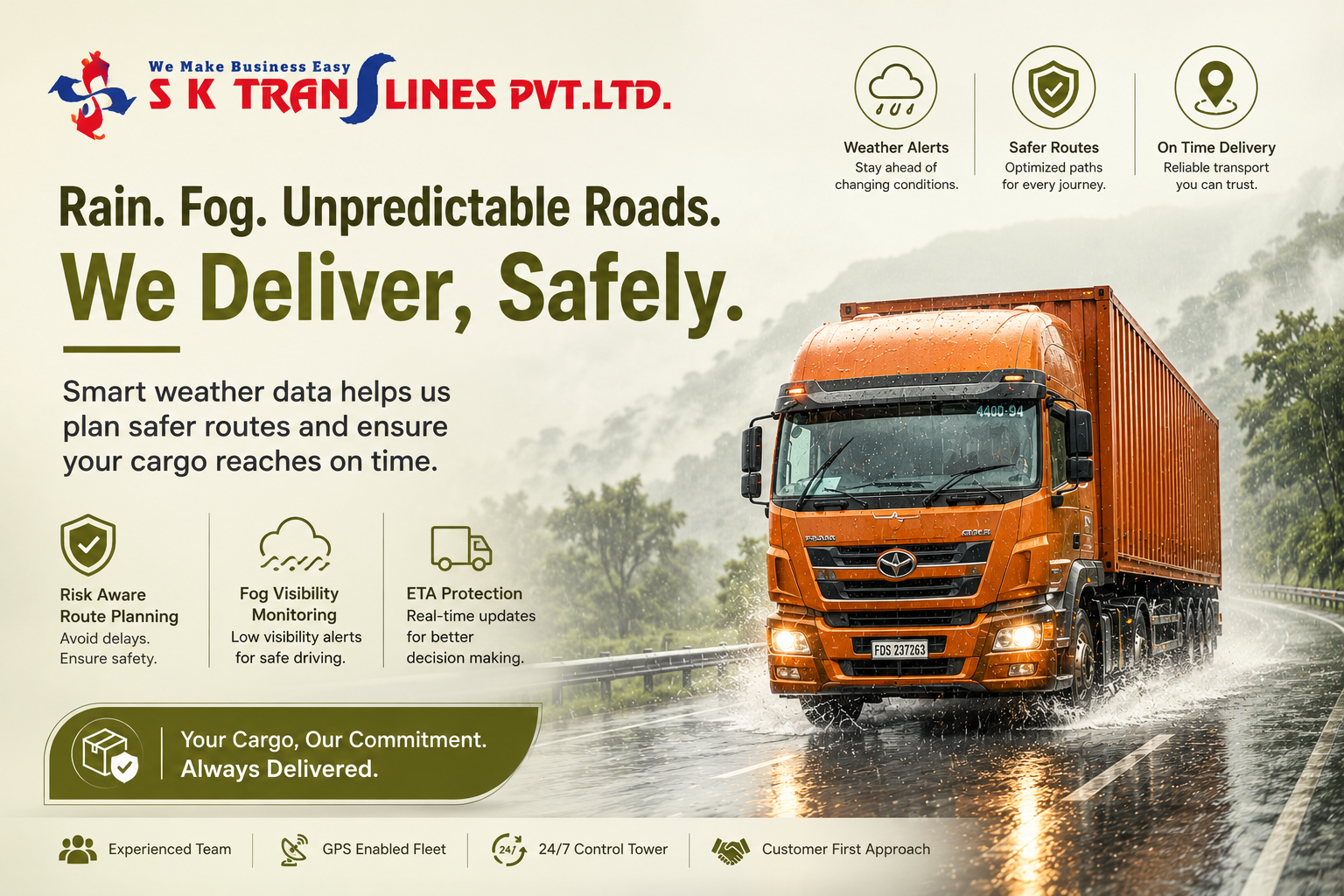
Weather plays a major role in road transportation. For logistics companies, every route is affected by changing road conditions, rainfall, fog, heat, storms and visibility levels. A transporter may have the right vehicle, experienced driver and strong delivery plan, but sudden weather changes can still create delays and safety risks.
This is why weather data has become an important part of modern logistics planning. By using accurate weather updates and forecasts, transporters can plan safer routes, reduce delivery disruptions and protect both drivers and goods during long-distance movement.
Weather Data Helps in Better Route Planning
Route planning is not only about choosing the shortest road. It is about choosing the safest and most reliable route. Weather data helps transporters understand which routes may face heavy rainfall, fog, waterlogging, landslides, strong winds or extreme heat.
For example, if a route is expected to face heavy rain, the logistics team can select an alternate road, adjust the dispatch time or alert the driver in advance. This helps avoid unnecessary risk and reduces the chances of vehicle breakdowns, cargo damage or delivery delays.
A smart logistics company does not wait for problems to happen. It uses weather information to plan ahead.
Safer Driving During Rainy Conditions
Heavy rainfall can make roads slippery and reduce visibility. It can also increase the risk of accidents, traffic jams and route blockages. For heavy commercial vehicles, braking distance increases during wet road conditions, making careful driving even more important.
Weather data allows transporters to prepare drivers before they enter rain-affected areas. Drivers can be advised to reduce speed, maintain safe distance, avoid risky routes and take halts when required.
This not only protects the vehicle and goods but also ensures driver safety.
Managing Fog and Low Visibility
Fog is one of the biggest challenges for transporters, especially during early morning and winter routes. Low visibility can slow down vehicles and increase accident risk.
When logistics teams track weather forecasts, they can identify areas where fog is expected. Based on this information, they can reschedule movement, change departure timing or guide drivers to take extra precautions.
For time-sensitive deliveries, this helps set realistic delivery expectations instead of making unsafe decisions on the road.
Protecting Goods From Weather-Related Damage
Different types of goods need different levels of protection during transit. Some cargo may be sensitive to moisture, heat or rough handling. Weather data helps transporters prepare better before dispatch.
If heavy rain is expected, the team can check packaging, tarpaulin coverage, container sealing and loading safety. If extreme heat is predicted, special care can be taken for temperature-sensitive goods.
Proper preparation reduces the chances of damage and ensures that goods reach the destination in better condition.
Better Communication With Customers
Weather-related delays are sometimes unavoidable. But poor communication makes the situation worse. When logistics companies use weather data, they can inform customers about possible delays in advance.
Instead of waiting until the delivery is late, they can share updates, explain the reason and provide a revised delivery timeline. This builds trust because the customer understands that the delay is due to real road and weather conditions.
Clear communication helps businesses maintain customer confidence even when external challenges occur.
Reducing Vehicle Breakdowns and Road Risks
Bad weather can put extra pressure on commercial vehicles. Waterlogged roads, muddy routes, high heat and rough driving conditions can affect tyres, brakes, engine performance and fuel efficiency.
When transporters know the weather conditions in advance, they can inspect vehicles more carefully before dispatch. Tyres, lights, brakes, wipers, battery and emergency tools can be checked properly.
This preventive approach helps reduce breakdowns and keeps long-distance transportation more reliable.
Supporting Driver Safety and Decision-Making
Drivers are the most important part of road logistics. They face real-time road challenges and must make quick decisions during uncertain weather.
Weather data gives drivers better awareness before and during the journey. When drivers know what to expect, they can plan halts, avoid dangerous stretches and drive with more caution.
A transporter that supports drivers with accurate information creates a safer and more responsible logistics system.
Helping Control Towers Monitor Movement
Modern logistics control towers use GPS tracking, route updates and weather information together. This helps teams monitor vehicle movement in real time and respond quickly when conditions change.
If a route becomes risky due to heavy rain, flood alerts or poor visibility, the control team can guide the driver toward a safer alternative. This improves decision-making and reduces panic during unexpected situations.
Weather data becomes even more powerful when combined with real-time tracking.
Better Planning During Seasonal Challenges
India has different seasonal logistics challenges. Monsoon brings waterlogging and slippery roads. Winter brings fog in many regions. Summer creates heat-related vehicle stress. Hilly and remote routes may face landslides or poor road conditions during heavy rainfall.
Transporters who study seasonal weather patterns can plan better for every region. They can prepare backup routes, adjust dispatch schedules and arrange additional support when needed.
This makes freight movement more dependable throughout the year.
Weather Data Improves Delivery Reliability
Businesses depend on transporters for timely and safe delivery. Weather data helps logistics companies reduce uncertainty and improve delivery reliability.
It allows better planning, safer driving, stronger communication and faster decision-making. Even when delays happen, transporters can manage them professionally with proper updates and alternate plans.
Reliable logistics is not only about speed. It is about making smart decisions that protect goods, drivers and business commitments.
Conclusion
Weather can change quickly, but transporters can reduce its impact with the right planning. Weather data helps logistics companies choose safer routes, protect goods, guide drivers, prevent breakdowns and communicate better with customers.
For businesses, this means fewer surprises, safer deliveries and stronger supply chain reliability. In modern logistics, weather data is not just useful information. It is a powerful tool for safer and smarter transportation.